
Views: 260 Author: Keychain Venture Publish Time: 2026-08-24 Origin: Site


Content Menu
● Why Coolant Level Checks Matter
● How to Check Your Coolant Level Safely
>> Step 1: Park Safely and Let the System Cool
>> Step 2: Find the Coolant Reservoir
>> Step 3: Read the MIN and MAX Markings
>> Step 4: Inspect Coolant Condition, Not Only Quantity
>> Step 5: Top Up With the Correct Coolant
● Coolant Checks for Buses, Trucks and NEVs
● When Low Coolant Requires Immediate Service
● KeyChain: Support for Reliable Vehicle Operations
● FAQs About Checking Coolant Levels
>> 1. How often should I check my coolant level?
>> 2. Can I check coolant immediately after driving?
>> 3. Can I use water instead of coolant?
>> 4. Is it safe to mix different coolant colors?
>> 5. Why does my coolant level keep dropping?
Checking coolant level is a simple preventive-maintenance task, but the consequences of getting it wrong can be expensive. For passenger cars, buses, heavy-duty trucks and new energy vehicles (NEVs), the correct coolant level and specification help protect engines, thermal-management components and long-term operating reliability.
At KeyChain, we support customers sourcing high-quality buses, heavy trucks and new energy vehicles from China for domestic and international markets. Based on practical fleet-maintenance priorities, this guide explains how to check coolant levels safely, select the right coolant, spot warning signs early, and build a more reliable inspection routine.
> Important safety notice: Never remove a coolant reservoir cap or radiator cap when the engine, cooling system, or battery thermal-management system is hot. Pressurized hot coolant can cause severe burns. Check only after the vehicle has fully cooled.
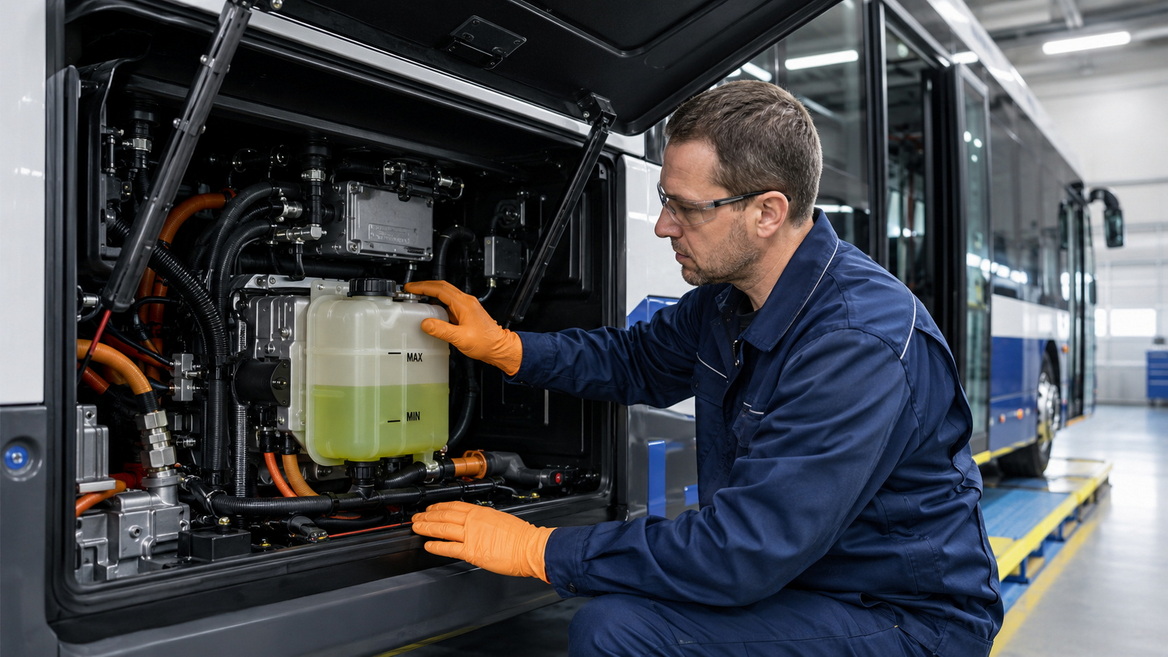
Coolant is more than "colored water." It transfers excess heat away from critical components while helping prevent freezing, corrosion, scale buildup and overheating.
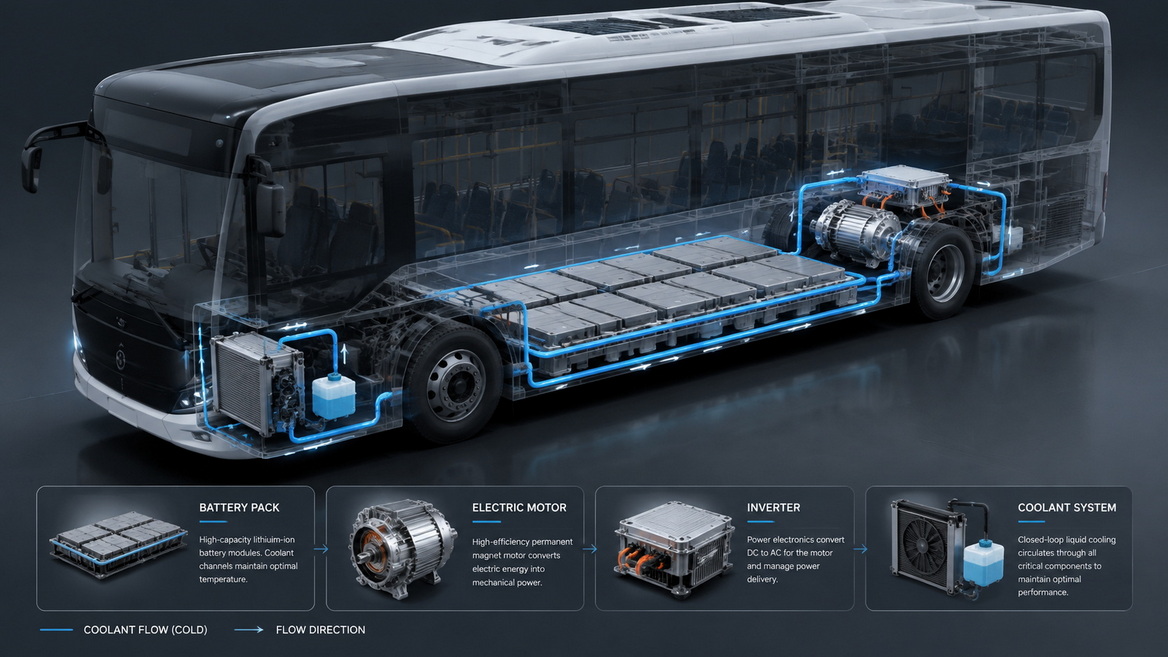
In an internal-combustion vehicle, coolant circulates through the engine block, cylinder head, radiator, heater circuit and water pump. In electric buses and NEVs, coolant may also support battery packs, electric motors, inverters, power electronics and charging-related thermal systems.
A low coolant level can lead to:
- Engine overheating in diesel or gasoline vehicles
- Reduced heat transfer through the radiator
- Corrosion or scale inside cooling-system passages
- Water-pump wear or cavitation risks
- Heater-performance problems
- Loss of thermal control for batteries and electrical components in applicable NEVs
- Unplanned vehicle downtime and repair costs
A sudden coolant drop is not a normal "top-up issue." It can indicate a leak, pressure-cap problem, damaged hose, radiator fault, water-pump leak, internal engine issue, or another cooling-system defect that requires diagnosis.
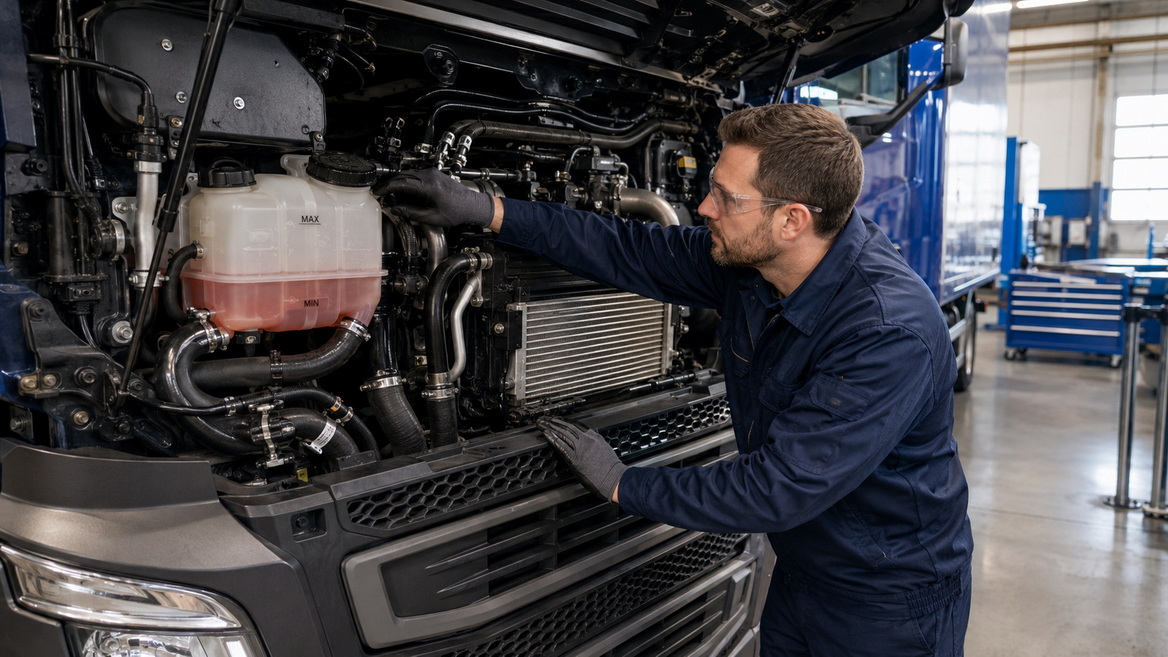
For most cars, buses and trucks, the core process is similar. However, always consult the vehicle's operator manual and maintenance documentation because reservoir location, approved coolant and inspection requirements vary by model.
Park on level ground, apply the parking brake and switch off the engine or power system.
Wait until the cooling system is cold before opening or handling the coolant reservoir. The source article estimates that an engine may take around three hours to cool after driving, but the actual time depends on ambient temperature, engine load, vehicle size and operating conditions. Larger buses and heavy-duty trucks may require longer.
Before checking:
- Park on a stable, level surface
- Turn off the engine and allow it to cool completely
- Wear protective gloves and eye protection where appropriate
- Keep children and animals away from coolant
- Do not open a pressurized cap on a hot system
Most modern vehicles use a transparent or semi-transparent coolant expansion tank, also called an overflow reservoir. It is usually located in the engine compartment and may have a coolant symbol, warning label or "coolant" wording on the cap.
For buses and heavy trucks, the reservoir may be located behind a service panel, within the engine bay or near the radiator assembly. Access arrangements vary significantly by vehicle design.
Look for:
- A translucent plastic tank
- A cap marked with a temperature warning
- Coolant or radiator symbols
- Clearly printed MIN and MAX level lines
- Hoses connected to the cooling system
Do not confuse the coolant reservoir with the windshield-washer-fluid tank. If you are unsure, consult the manual or ask a qualified technician.
With the system cold and the vehicle parked level, inspect the coolant level through the reservoir wall.
The coolant should normally sit between the MIN and MAX marks. A reading below MIN means the system needs attention. A level slightly below MAX is usually normal; overfilling can also create problems as coolant expands when it heats up. The original guide correctly notes that the reservoir often allows visual inspection without opening the cap.
| Coolant level | Recommended action |
|---|---|
| Between MIN and MAX | No immediate top-up required; continue routine checks |
| At or just below MIN | Inspect for visible leaks and top up only with the approved coolant |
| Repeatedly below MIN | Arrange professional inspection; investigate the cause |
| Above MAX when cold | Do not add more; check the manual or seek service advice |
| Reservoir empty or warning light active | Do not continue normal operation until the problem is assessed |
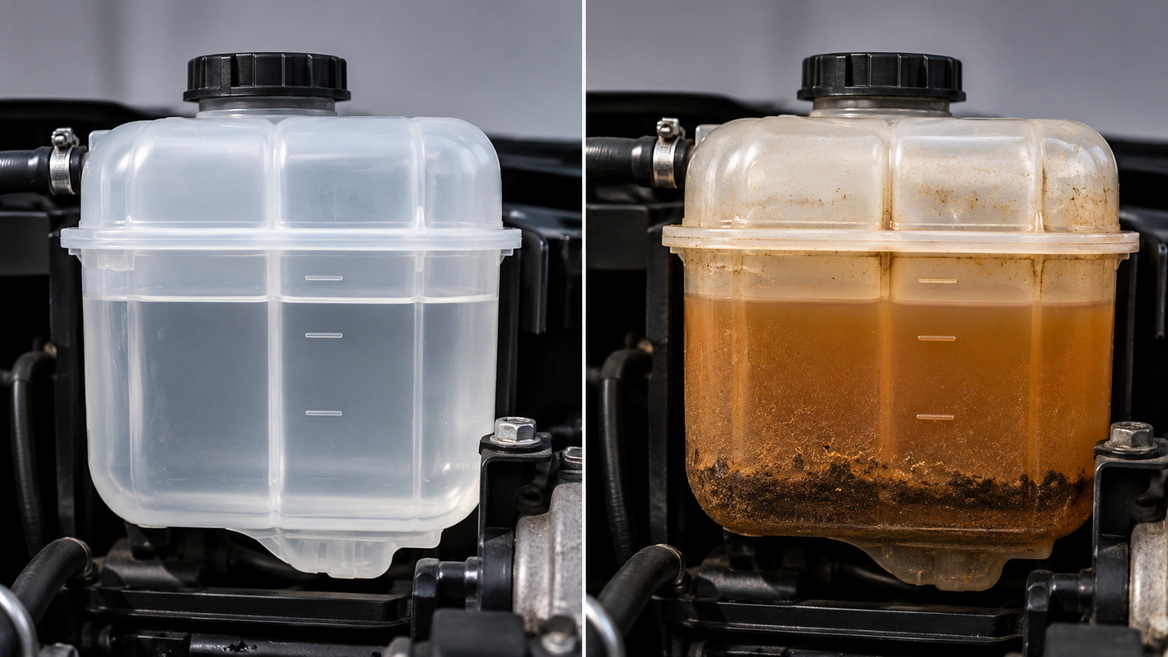
A level check is useful, but it is incomplete if you ignore coolant condition. Look through the reservoir for signs that the fluid may be contaminated or degraded.
Warning signs include:
- Rust-colored fluid or sediment
- Oil film on the coolant surface
- Milky appearance
- Gel-like deposits
- Floating particles
- Strong unusual odor
- Crusty white, green, pink or orange residue near hoses, caps or joints
For heavy-duty fleets, coolant testing should include more than a visual inspection. Chevron recommends checking clarity and particles, then using a calibrated refractometer to assess freeze protection; it also recommends an annual laboratory coolant analysis as part of a preventive-maintenance program.
Only add coolant that meets the vehicle manufacturer's specification. Do not select coolant solely by color.
Coolant colors are not a reliable universal identification method. Green, pink, red, blue, yellow and orange products can use different chemical technologies depending on the manufacturer and market. The specification on the product label and the vehicle manual matter more than color.
Common coolant technology families include:
| Coolant type | General characteristics | Key precaution |
|---|---|---|
| IAT | Traditional inorganic additive technology | Often has shorter service life |
| OAT | Organic acid technology; often used for longer service intervals | Must meet the required OEM specification |
| HOAT | Hybrid organic acid technology combining organic and inorganic inhibitors | Compatibility differs by vehicle and formulation |
| Heavy-duty ELC/NOAT | Extended-life formulations commonly used in commercial applications | Follow truck or engine maker requirements for testing and extenders |
Mixing incompatible coolant chemistries can reduce corrosion protection, cause deposits or shorten coolant life. If the installed coolant type is unknown, do not guess. Have the system identified, tested, or professionally drained and refilled according to the manufacturer's service procedure.
Use this top-up process:
1. Confirm that the system is fully cool.
2. Check the vehicle manual for the approved coolant standard and dilution ratio.
3. Use pre-mixed coolant where the manufacturer recommends it, or mix concentrate only with the specified water quality.
4. Place a clean funnel in the reservoir opening.
5. Add coolant slowly until the level reaches the recommended cold-fill mark.
6. Do not exceed the MAX line.
7. Refit the cap securely and clean spilled fluid immediately.
8. Record the top-up date, vehicle mileage or engine hours, and coolant type used.
The source article suggests a typical 50:50 coolant-to-deionized-water blend, but this is not universal. The required concentration varies by product, climate, engine and OEM specification; the manual always takes priority.
Commercial vehicles operate under tougher conditions than many passenger cars. Heavy payloads, long idle periods, stop-start urban operation, steep gradients, high ambient temperatures and long driving hours can all increase thermal load.
For a bus or heavy truck fleet, coolant checks should be tied to preventive maintenance—not treated as an occasional visual task. Heavy-duty industry guidance recommends regular checks for contamination and freeze point, while one fleet-focused source suggests testing every three to six months for demanding applications.
A practical fleet inspection routine may include:
- Pre-trip visual check for leaks and warning indicators
- Weekly reservoir-level inspection for high-utilization vehicles
- Seasonal freeze-protection checks before cold weather
- Refractometer testing after major cooling-system repairs
- Periodic pH, inhibitor and contamination testing where required
- Annual laboratory analysis for larger fleets or severe-duty operations
- Maintenance logs tracking coolant type, concentration, top-ups and test results
For NEVs, do not assume the coolant system is identical to a diesel vehicle's system. Battery and power-electronics cooling loops can have model-specific fluids, servicing procedures, pressure requirements and electrical-safety precautions. Maintenance teams should follow the OEM's approved procedure and avoid substituting generic automotive coolant without explicit authorization.
Topping up coolant may restore the level temporarily, but it does not resolve the reason it became low. Stop and seek qualified service if you notice any of the following:
- Coolant level falls repeatedly after topping up
- Temperature gauge rises above normal
- A coolant-temperature or overheating warning appears
- Steam comes from the engine compartment
- Coolant puddles form beneath the vehicle
- Sweet smell is present around the vehicle
- Cabin heater stops producing heat
- Coolant appears oily, sludgy or heavily discolored
- Hoses are swollen, cracked or leaking
- The vehicle loses power or enters protection mode
For commercial operators, continuing to drive an overheating truck or bus can turn a manageable cooling-system repair into major engine damage and avoidable downtime.
Choosing the right bus, heavy truck or new energy vehicle is only the first step. Reliable operation also depends on proper inspection routines, correct fluids, trained technicians and access to accurate maintenance information.
KeyChain provides high-quality buses, heavy-duty trucks and new energy vehicle solutions for customers in China and international markets. If you are sourcing commercial vehicles, developing a fleet-maintenance plan, or evaluating vehicle specifications for your operating environment, our team can help you identify solutions aligned with your route conditions, payload needs and service requirements.
CTA: Contact KeyChain today to discuss your bus, heavy truck or new energy vehicle requirements and build a more reliable fleet solution.
For most private vehicles, check it regularly and before long trips, especially during hot or cold seasons. For buses and heavy-duty trucks, include coolant inspection in a documented preventive-maintenance schedule based on operating hours, mileage, load and manufacturer guidance.
No. Wait until the engine and cooling system have cooled completely. A hot cooling system may be pressurized, and hot coolant can cause serious burns if released.
Do not use plain water as a long-term substitute unless the manufacturer specifically directs it for an emergency situation. Coolant provides freeze protection, boil-over protection and corrosion control that water alone cannot provide.
Not necessarily. Coolant color is not a reliable guide to chemical compatibility. Check the vehicle's required specification and the coolant label; mixing different technologies without confirmed compatibility can reduce protection or create deposits.
Recurring coolant loss can indicate an external leak, failing cap, hose problem, radiator issue, water-pump fault or an internal engine problem. Do not rely on repeated top-ups—have the system inspected.
1. Evans Halshaw. " Guide: How to Check Your Car's Engine Coolant Levels https://www.evanshalshaw.com/blog/how-to-check-your-coolant-levels/ " Accessed August 24, 2026.
2. UK Met Office. " 6 Simple Checks to Prepare Your Vehicle for Winter https://weather.metoffice.gov.uk/warnings-and-advice/seasonal-advice/travel/6-things-to-do-to-prepare-your-vehicle-for-winter "
3. UK Government. " Ethylene Glycol: General Information https://www.gov.uk/government/publications/ethylene-glycol-properties-incident-management-and-toxicology/ethylene-glycol-general-information " Updated October 17, 2024.
4. Chevron Lubricants. " Coolant Maintenance Isn't Just a Winter Thing https://www.chevronlubricants.com/en_us/home/learning/from-chevron/heavy-duty-diesel-vehicles-and-equipment/coolant-maintenance-isnt-just-a-winter-thing.html " February 23, 2023.
5. AutoZone. " Can You Mix Coolant Brands? Why Type Matters More Than Color https://www.autozone.com/diy/antifreeze-coolant/can-you-mix-coolant-brands " January 30, 2024.
6. National Fleet Management. " Golden Rules for Heavy-Duty Coolant System Care https://www.nationalfleetmgt.com/articles/golden-rules-for-heavy-duty-coolant-system-care " November 12, 2024.
7. BigMackTrucks. com. " How to Maintain Your HD Engine Coolant System https://www.bigmacktrucks.com/topic/36664-how-to-maintain-your-hd-engine-coolant-system/ "


