
Views: 222 Author: Sara Publish Time: 2026-01-23 Origin: Site


Content Menu
● First-Generation Honda CR-V (1997-2001): Setting the Standard
● Second-Generation Honda CR-V (2002-2006): Power and Space Upgrades
● Third-Generation Honda CR-V (2007-2011): Refinement and Diesel Options
● Fourth-Generation Honda CR-V (2012-2016): Sleek Design Meets Tech
● Fifth-Generation Honda CR-V (2017-2022): All-New Platform and Efficiency
● 2025-2026 Honda CR-V: Hybrid Dominance and Latest Innovations
● Honda CR-V Reliability Ratings and Ownership Costs (2026 Data)
● Real-World Case Studies – CR-V in Fleets and Families
● Buyer's Checklist – Steps to Choose Your Ideal CR-V
● Why KeyChain Auto Excels for Global CR-V Buyers
● FAQ
>> 1. What's the best fuel economy for 2026 Honda CR-V?
>> 2. Is the CR-V Hybrid worth it over gas models?
>> 3. How reliable is the Honda CR-V long-term?
>> 4. CR-V vs. RAV4: Key differences?
>> 5. Can I import a used CR-V via KeyChain?
The Honda CR-V remains a top choice for compact SUVs, blending reliability, versatility, and modern tech since its 1997 debut. This 2026 guide covers its evolution, key specs, and why it excels for families and adventurers, optimized for buyers seeking Honda CR-V history, 2025-2026 models, and used Honda CR-V prices.

Launched in 1996 for Japan and 1997 in North America, the original Honda CR-V used the Civic platform for a unibody design that prioritized durability and lightweight construction. Available mainly in LX trim, it featured front-wheel-drive (FWD) or intelligent AWD, with a double-wishbone suspension system that provided confident handling on slippery surfaces and light off-road trails. This setup made it stand out from competitors, offering family-friendly utility without sacrificing drivability.
Key interior perks included foldable rear seats that revealed a unique picnic table storage compartment in the floor, air-conditioning, power windows, dual airbags, roof rails, and metallic paint as standard. The 1996 sports trim added alloy wheels, anti-lock braking system (ABS), fog lamps, a hard spare wheel cover, and a sunroof for enhanced style and safety. By 2001, the Classic model introduced a CD and cassette radio alongside the standard options, appealing to tech-savvy buyers.
Engine options started with a 2.0L B20B producing 126 hp at 5400 rpm and average fuel consumption of 10.2 L/100km, paired with a 4-speed automatic or 5-speed manual transmission. In 1999, Honda upgraded to the B20Z 2.0L 4-cylinder engine, delivering 147 hp at 6200 rpm and slightly better efficiency at 10 L/100km. These powertrains, combined with the intelligent AWD, positioned the first-gen CR-V as a reliable family SUV ideal for urban commutes and weekend adventures.
The unibody frame integrated the floor plan, body, and chassis into a single structure, enhancing crash safety and reducing weight. Plastic cladding protected bumpers and fender wells, while most markets featured a chrome grille—except the U.S., which used matching black plastic. This generation set benchmarks for mini-SUVs, proving Honda's knack for practical, fun-to-drive vehicles.
The 2002 Honda CR-V arrived as a complete redesign on Honda's Global Compact Platform, increasing interior room without extending the overall length. This clever engineering allowed for more passenger and luggage space, making it a versatile daily driver. A new rigid chassis improved torsional and bending rigidity, elevating safety and handling precision.
Exterior design remained practical with protective plastic cladding, but the focus shifted inward: fold-flat seats maximized cargo flexibility, and comfort features like enhanced air vents and sound insulation created a quieter cabin. Transmission advancements included Grade Logic Control on the 4-speed automatic, which intelligently downshifted on steep inclines, and a refined 5-speed manual with short-throw shifts for smoother operation.
At its core was a new 2.4L K24A1 i-VTEC 4-cylinder engine producing 160 hp at 6500 rpm, maintaining fuel efficiency around 10 L/100km despite the power bump. Honda's Variable Valve Timing and Lift Electronic Control (i-VTEC) optimized performance across rev ranges, delivering responsive acceleration. This generation built on the original's success, outperforming rivals in passenger safety, utility, and long-term dependability, cementing the CR-V's mid-size SUV appeal.
Buyers loved the increased refinement: better noise isolation, upgraded materials, and family-oriented touches like additional cupholders and map lights. It continued to slot perfectly between the smaller HR-V and larger Pilot, offering premium features at accessible prices.
Debuting in late 2006 as a 2007 model, the third-gen Honda CR-V introduced a lightweight rear liftgate replacing the previous side-hinged door, with the spare tire now stowed under the floor for easier access. Styling refreshed the front grille, bumpers, and taillights, giving it a more aggressive stance. Interiors across LX, EX, and EX-L trims gained new seat fabrics, upgraded audio systems, and amenities like optional navigation.
Power came from an improved 2.4L K-series 4-cylinder gasoline engine at 166 hp and 5800 rpm, paired with a 5-speed automatic. Global markets enjoyed diesel choices: a 2.2L producing 138 hp at 4000 rpm with exceptional 5.1 L/100km efficiency, and a high-revving 2.0L K20A at 221 hp and 8000 rpm consuming 9.0 L/100km. These options catered to diverse needs, from fuel-sipping commuters to performance enthusiasts.
The suspension tuned for comfort balanced ride quality with composed cornering, while standard safety features like stability control advanced the CR-V's reputation. This era emphasized practicality: the liftgate improved loading, and interior storage nooks abounded. It became a global bestseller, praised for blending efficiency, space, and Honda's bulletproof engineering.
The 2012 Honda CR-V marked a bold exterior evolution with standard fog lights, alloy wheels, and higher trims adding chrome accents, roof rails, and daytime running lights for a premium look. Interiors revolutionized the cabin: a unified center console and dashboard housed modern LCD screens displaying audio settings, fuel economy, and vehicle info. Despite a slightly smaller body, both rows remained spacious and comfortable.
The star was a 2.4L i-VTEC 4-cylinder engine churning 185 hp, mated to a continuously variable transmission (CVT) for seamless shifts and improved economy. Larger brake boosters delivered sportier stopping power, while revised shock absorbers, anti-roll bars, springs, and lower control arms sharpened handling. Fuel consumption dropped noticeably, appealing to eco-conscious buyers.
This generation excelled in tech integration: Bluetooth, USB ports, and optional rearview cameras became norms. Cargo versatility shone with 70+ cubic feet of space seats folded. It transformed the CR-V into a sleek, modern SUV that rivaled upscale competitors while retaining core values of reliability and value.
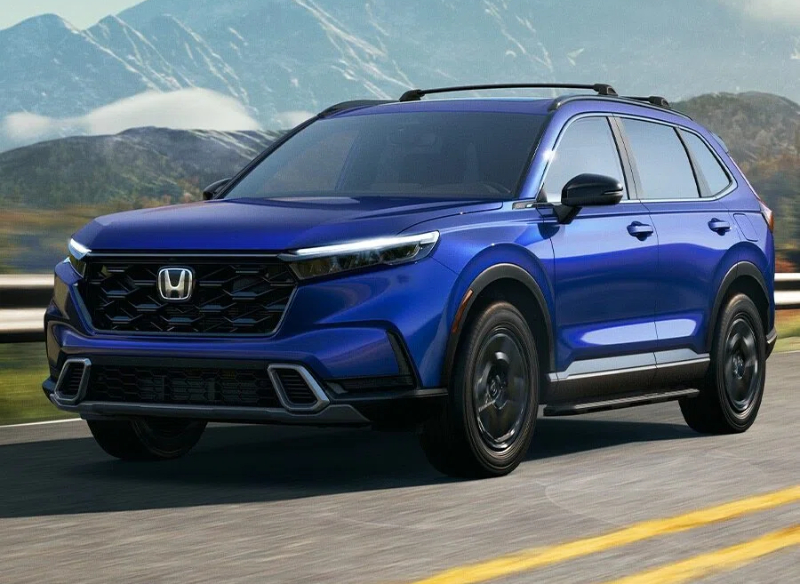
Redesigned from the ground up for 2017, the fifth-gen CR-V preserved familiar dimensions but introduced a turbocharged 1.5L engine (190 hp) and hybrid variants, achieving 8.0 L/100km averages. Trims like LX, EX, and EX-L standardized the Honda Sensing suite: adaptive cruise, lane-keeping, and collision mitigation.
Tech surged with larger touchscreens, Apple CarPlay, Android Auto, and digital gauges. Cargo expanded to over 76 cubic feet, perfect for family hauls. The hybrid's electric assist smoothed power delivery, reducing noise and boosting torque. This model refined the CR-V formula, emphasizing connectivity and safety without compromising driveability.
The latest CR-V generations dominate with hybrid powertrains: the 2025-2026 CR-V Hybrid combines gas and electric for 204 hp total and 247 lb-ft torque, posting up to 40 mpg combined (43 city/36 highway FWD). The non-hybrid 1.5L turbo delivers 190 hp and 34 mpg highway.
TrailSport trim enhances off-road cred with all-wheel drive, torque vectoring, skid plates, and rugged tires. Honda Sensing now includes traffic sign recognition and blind-spot monitoring standard. Fuel economy peaks at 38 city/33 highway in hybrid TrailSport.
Interiors feature dual-zone climate, wireless charging, 10.2-inch digital clusters, and panoramic moonroofs on top trims. Quiet cabins and supportive seats make long drives effortless.
| Model Year | Engine Options | MPG (Combined FWD) | Key Upgrades |
|---|---|---|---|
| 1997-2001 | 2.0L (126-147 hp) | ~23 | AWD intro, picnic table |
| 2002-2006 | 2.4L (160 hp) | ~23 | i-VTEC, rigid chassis |
| 2007-2011 | 2.4L (166 hp), Diesel | ~28+ | Liftgate, efficiency |
| 2012-2016 | 2.4L (185 hp) | ~28 | CVT, LCD dash |
| 2017-2022 | 1.5T/ Hybrid | ~30-38 | Turbo/hybrid, Sensing |
| 2025-2026 | 1.5T/ Hybrid (204 hp) | 28-40 | 40 mpg hybrid, TrailSport |
CR-V reliability leads compact SUVs: J.D. Power rates it 84/100, with Consumer Reports forecasting above-average scores through 2026. Pre-2020 models occasionally faced AC issues, largely resolved in hybrids.
2026 ownership costs favor hybrids, saving over $500 annually on fuel versus gas rivals. Resale holds at 60% after five years per Kelley Blue Book. Annual maintenance averages $450, undercutting Toyota RAV4.
Certified pre-owned 2023+ hybrids extend warranties to seven years/100,000 miles. Battery life exceeds 150,000 miles, with minimal degradation.
Fleets love CR-V hybrids for urban delivery: KeyChain Auto clients report 20% fuel savings and reliable AWD in varied weather. One exporter logged 100,000 km with basic services only.
Families rave about a 2025 Hybrid's 50,000-mile trouble-free run, hauling sports gear in 76 cu ft cargo. Compared to RAV4, it offers superior torque; versus Forester, better on-road refinement.
Experts note hybrids future-proof against 2026 emissions rules, with instant electric torque transforming city driving.
1. Assess needs: Families need cargo; adventurers want TrailSport AWD.
2. Test hybrids: Experience 204 hp torque and verify 40 mpg.
3. Inspect used: Check CVT fluid pre-2020, hybrid battery health.
4. Compare trims: LX basics; EX-L/TrailSport for premium features.
5. Budget: New 2026 ~$32k; used 2020+ hybrids ~$25k.
6. Service history: Prioritize CPO for extended coverage.
China's leading used commercial vehicle supplier, KeyChain (keychainauto.com) delivers inspected Honda CR-Vs with buses and trucks. Contact: +8613572980919 | abbie@keychainventure.com for imports.
Ready for your reliable used Honda CR-V? Scan inventory at keychainauto.com or WhatsApp +8613572980919 – global shipping included!
Contact us to get more information!
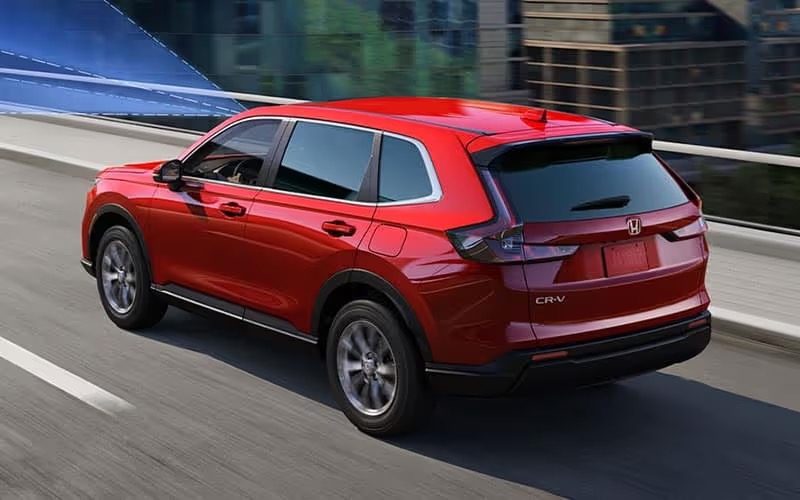
Hybrids achieve up to 40 mpg combined (FWD), with 43 city/36 highway – ideal for efficiency.
Yes, for $500/year fuel savings, smoother drive, and stronger resale. Non-hybrids suit short trips.
Top-rated: 84/100 J.D. Power; minimal issues post-2020. CPO adds peace of mind.
CR-V offers more torque (247 lb-ft) and space; RAV4 edges hybrid MPG slightly. CR-V wins styling/safety.
Absolutely – KeyChain specializes in global exports of inspected CR-Vs. Contact abbie@keychainventure.com.
1. https://blog.beforward.jp/car-review/honda-cr-v-drive-love.html
2. https://www.battisonhonda.com/blog/reasons-to-love-the-2025-honda-cr-v-hybrid/
3. https://www.keychainauto.com
4. https://www.rickroushhonda.com/blogs/4553/6-reasons-drivers-love-the-2025-honda-cr-v-hybrid/
5. https://www.whitesautomallhonda.com/blog/2025/july/23/drive-the-new-honda-cr-v-explore-now.htm
6. https://www.middletownhonda.com/blog/four-reasons-your-family-will-love-a-honda-cr-v-or-cr-v-hybrid
7. https://www.kleinhonda.com/blog/why-are-folks-so-excited-for-the-cr-v-trailsport


