
Views: 222 Author: Keychain Venture Publish Time: 2026-04-23 Origin: Site


Winter car washing is not just about keeping your vehicle looking clean. It is one of the most effective ways to reduce salt damage, protect paintwork, and slow corrosion during the coldest months of the year.
Winter roads are harsh on any vehicle, and the problem is not only dirt. Road salt, slush, moisture, and repeated freeze-thaw cycles can stick to body panels, wheel arches, and the undercarriage, creating conditions that accelerate rust and hidden wear.
For buses, heavy-duty trucks, and electric commercial vehicles, the stakes can be even higher because these vehicles often cover long distances in wet, salted, or high-exposure environments. A winter wash routine is therefore both a cosmetic and a preventive maintenance task.
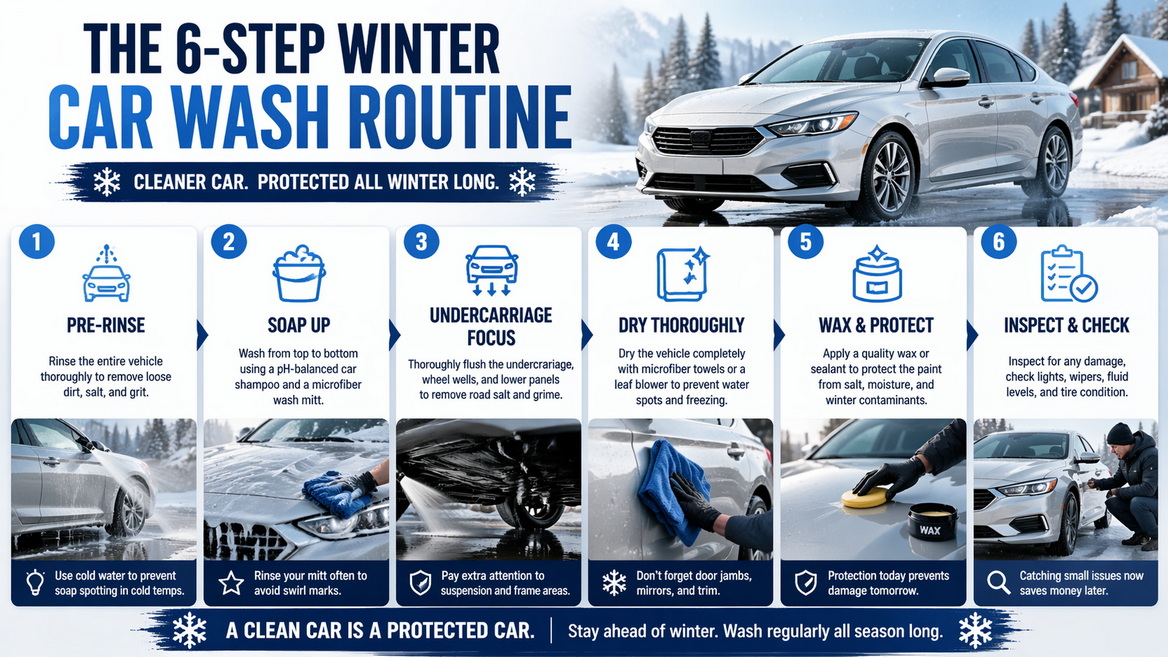
If you want the safest and most effective winter routine, follow this process.
1. Wash during the warmest part of the day. This lowers the chance of water freezing on the bodywork or in door seals.
2. Start with a pre-rinse. Remove loose snow, salt, and grit before touching the paint.
3. Focus on the undercarriage, wheel wells, and lower panels. These areas take the most abuse from road spray and salt.
4. Use a pH-balanced car shampoo. It is gentler on wax and sealants than harsh household cleaners.
5. Dry thoroughly. Pay attention to mirrors, door handles, fuel doors, and trim seams where water can freeze.
6. Apply wax or sealant after washing. This adds a protective barrier against moisture and grime.
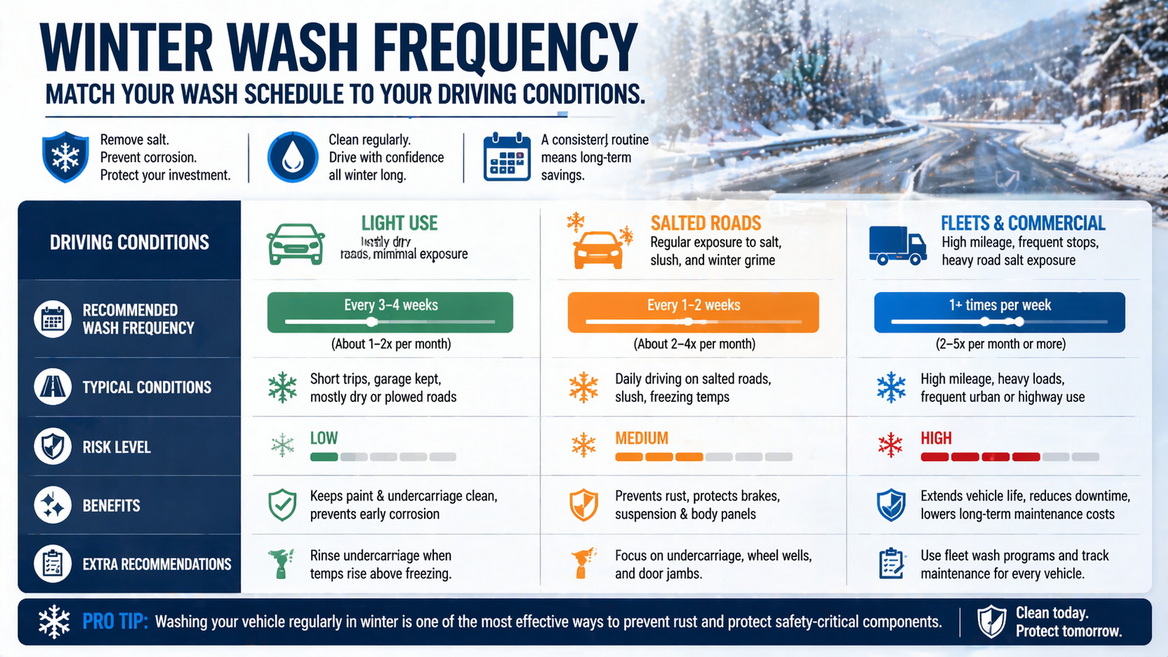
A good rule of thumb is to wash at least every two weeks in winter, and more often if you drive on salted roads or in heavy slush. AAA recommends regular washing and prioritizing the undercarriage, while Consumer Reports advises washing more often when the vehicle is heavily coated in salt.
For daily drivers in harsh winter regions, weekly washing is often the safer choice. For fleet vehicles, especially buses and trucks that operate continuously, the interval should be based on exposure rather than calendar time.
| Driving condition | Recommended wash frequency |
|---|---|
| Light winter use, minimal salt exposure | Every 2 weeks |
| Regular salted-road driving | Weekly to every 2 weeks |
| Heavy snow, slush, or highway commuting | Weekly |
| Fleet buses and trucks in winter service | Based on exposure, often weekly or more |
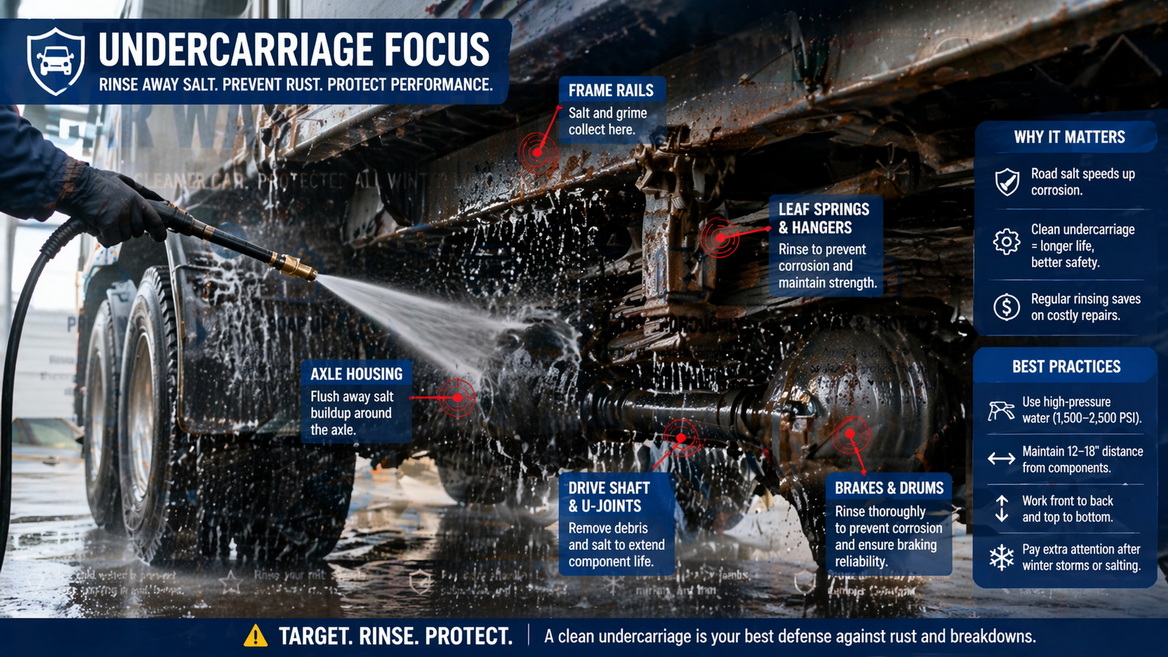
The undercarriage is the most overlooked part of winter cleaning, but it is often the first area where corrosion begins. AAA notes that road salt can accelerate rust underneath the vehicle, and multiple industry sources recommend underbody spraying as a key winter protection step.
If your local car wash offers underbody spray, it is usually worth the extra cost. For commercial vehicles, undercarriage washing should be paired with routine inspections of suspension parts, brake components, sensors, wiring routes, and exposed fasteners.
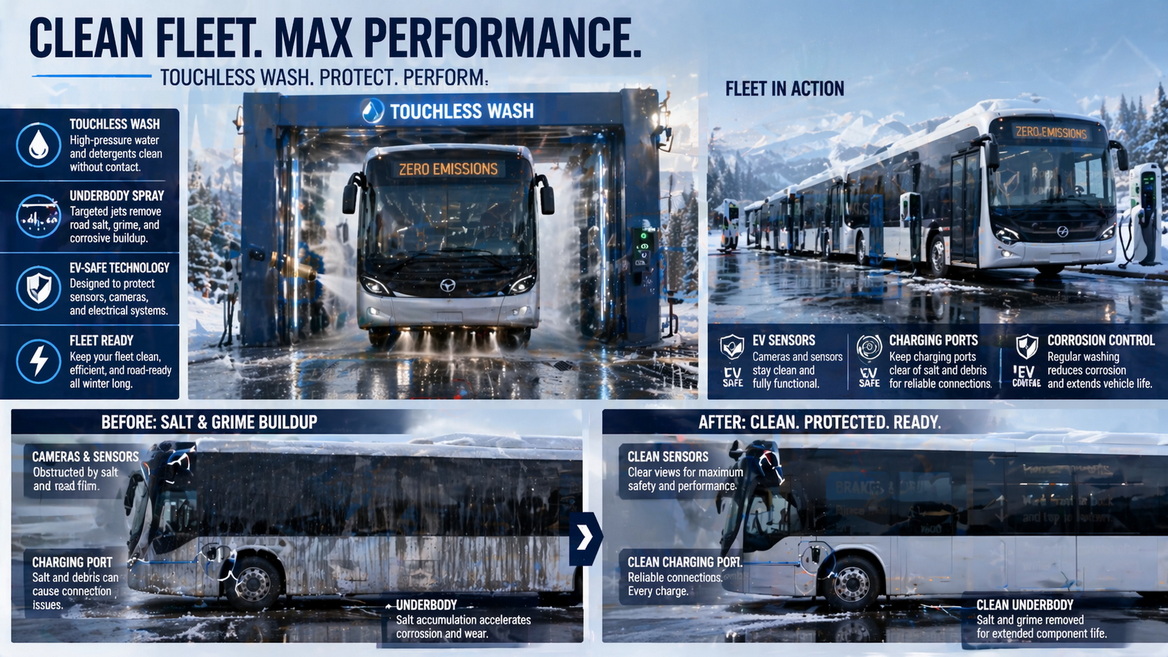
Electric vehicles, buses, and heavy-duty trucks benefit from winter washing just as much as passenger cars, but the process should be more deliberate. EV guidance from 2026 sources emphasizes closed charging ports, proper sealing, and avoiding washing immediately after driving if components are still warm.
For buses and trucks, winter washing is also about operational uptime. Salt buildup can affect exposed hardware, step areas, lower panels, sensors, and fleet presentation, while regular cleaning supports longer service life and easier inspections.
A winter-safe wash setup does not need to be complicated, but it should be complete. The original article correctly recommends a pressure washer, two buckets, separate wash mitts, microfiber towels, wheel brushes, shampoo, and wax.
For a more advanced and efficient setup, add the following:
- Touchless or soft-touch wash access when possible.
- Undercarriage spray for salt removal.
- Spray wax or sealant for faster protection between full details.
- Dedicated wheel cleaner for brake dust and road grime.
- Microfiber drying towels to reduce water spots and freezing.
Use this simple routine as a repeatable winter maintenance habit.
1. Remove snow and loose ice first.
2. Rinse lower panels, wheel arches, and the undercarriage.
3. Wash the body from top to bottom with clean mitts.
4. Rinse thoroughly.
5. Dry seams, mirrors, handles, and emblems.
6. Apply wax, sealant, or quick detailer.
7. Check doors, windows, lights, and sensors for remaining moisture.
This sequence protects the paint while reducing the chance of freezing around seals and moving parts. It is also easier to repeat consistently than a complex detailing workflow.
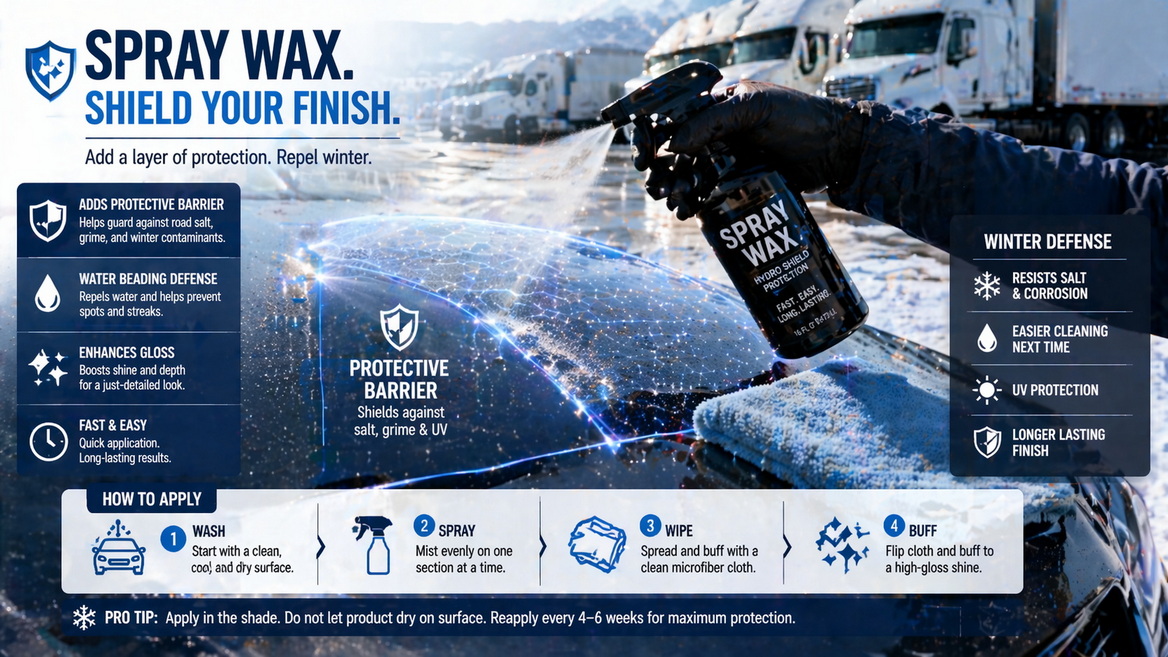
Wax or sealant creates a sacrificial layer between your paint and the winter environment. That layer helps reduce direct contact from road salt, moisture, and grime, which is why it remains one of the highest-value steps in cold-weather car care.
Modern spray waxes make this easier than older paste-only systems. For busy drivers, fleet operators, and commercial vehicle owners, a quick-applied sealant can deliver meaningful protection without turning maintenance into a full detailing job.
Winter washing should not stop at the exterior. Moisture carried into the cabin can cause fogging, condensation, bad odors, and dirty mats, especially if passengers or drivers bring in snow and slush.
A few practical habits help a lot:
- Shake out floor mats regularly.
- Keep a microfiber towel in the vehicle.
- Use anti-fog treatment on glass.
- Vacuum weekly where practical.
- Remove wet gloves, boots, and snow before it melts inside.
Protect your vehicle before winter damage becomes expensive. If you operate buses, heavy trucks, or new energy vehicles, build a winter wash and inspection routine that includes undercarriage cleaning, protective coatings, and regular checks for salt exposure.
Contact us to get more information!
Wash it at least every two weeks, and weekly if you drive often on salted or slushy roads.
A touchless wash is often a strong choice in winter because it reduces physical contact while still helping remove salt and grime, especially when paired with underbody spray.
Yes, but choose the warmest part of the day and dry the vehicle carefully to reduce the risk of frozen locks, seals, and water spots.
Because winter salt and slush collect underneath the vehicle, and that is where corrosion often starts.
Yes. EVs should have sealed charging ports, dry connection points, and careful handling around warm components after driving.
- Evans Halshaw, "5 Top Tips for Washing Your Car in Winter" — https://www.evanshalshaw.com/blog/5-top-tips-for-washing-your-car-in-winter/
- AAA Newsroom, "AAA Warns Drivers: Winter Road Salt Can Cause Hidden Vehicle Damage" — https://newsroom.acg.aaa.com/aaa-warns-drivers-winter-road-salt-can-cause-hidden-vehicle-damage/
- Consumer Reports, "How Often Should You Wash Road Salt Off Your Car?" — https://www.consumerreports.org/cars/how-often-should-you-wash-road-salt-off-your-car-a7227523841/
- Ascentek, "Winter Salt Corrosion: A Guide for Car Wash Owners" — https://www.ascentek.com/blog/winter-salt-corrosion-a-guide-for-car-wash-owners/
- Juhlapesu, "How to wash an electric car safely in winter" — https://www.juhlapesu.fi/en/how-to-wash-an-electric-car-safely-in-winter/
- Car and Driver, "Electric Car Maintenance: Everything You Need to Know" — https://www.caranddriver.com/shopping-advice/a70535313/maintaining-an-electric-car-ev-how-to/
- Highland Fleets, "7 Ways to Prepare Your Electric Bus Fleet for Winter" — https://highlandfleets.com/blog/7-ways-to-prepare-your-electric-bus-fleet-for-winter/
- Eco Car Cafe, "Top 10 Tips for a Successful Car Wash in Winter" — https://ecocarcafe.com/car-wash-in-winter/
- Alltown Car Wash, "Winter Car Wash Tips: Keep Your Ride Looking Fresh All Season" — https://alltowncarwash.com/winter-car-wash-tips-keep-your-ride-looking-fresh-all-season/


