
Views: 222 Author: Sara Publish Time: 2026-01-29 Origin: Site


Content Menu
● Hyundai Porter Overview and Generations
● 2011 Hyundai Porter Specs and Features
● 2012 Facelift: Key Upgrades Introduced
● 2013-2014 Model Year Refinements
● 2017-2018 Final Fourth-Gen Push
● Maintenance Guide for Longevity
● Buying Used Hyundai Porter: Expert Checklist
● Why Choose Hyundai Porter for Business Fleets?
● Frequently Asked Questions (FAQ)
>> 1. What are the main Hyundai Porter 2011-2018 model year differences?
>> 2. Is the 2011 Porter fuel-efficient for heavy loads?
>> 3. How reliable are used 2018 Porters?
>> 4. What's the payload for Southeast Asia models?
>> 5. Where to buy quality used Hyundai Porters?
>> 6. How does the 2012 facelift improve over 2011?
The Hyundai Porter stands as a reliable cabover pickup truck ideal for global businesses needing durable cargo transport. This guide details Hyundai Porter 2011-2018 model year differences, highlighting engine options, safety upgrades, performance specs, and practical advice to help buyers like fleet operators make informed decisions on used models.
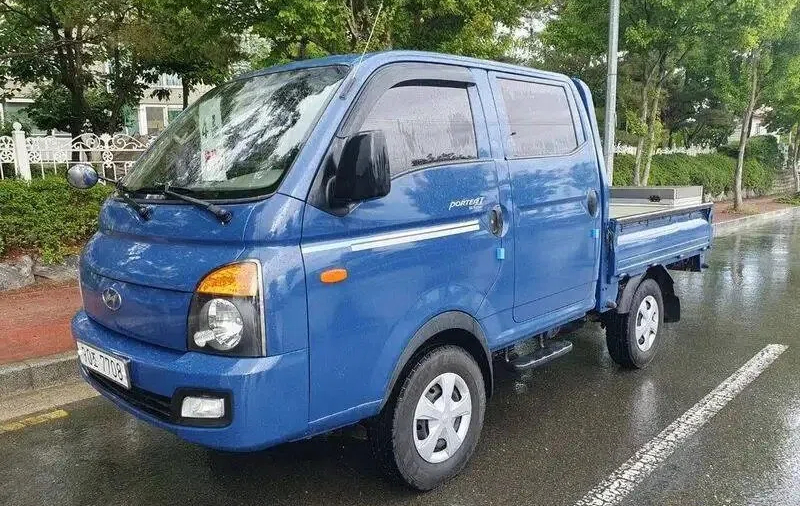
Introduced in 1977, the Hyundai Porter (H-100) excels in urban delivery and heavy-duty hauling as a light commercial vehicle (LCV). The fourth generation (2004-present) covers 2011-2018 models, with a pivotal facelift in 2012 boosting power and features.
Core strengths:
- Payload capacity: Up to 1.3 tons standard.
- Fuel economy: Averages 10-12 km/l diesel, varying by load.
- Global adaptability: Exported widely, including Southeast Asia, Europe, Africa, and Latin America.
By 2018, refinements made it a staple for used truck buyers seeking Hyundai Porter reliability at low cost. Its cabover design maximizes cargo space while keeping turning radius tight for city streets. Over decades, Hyundai refined the Porter to balance power, efficiency, and affordability, making it a top choice for small businesses and logistics firms worldwide.
The Porter's evolution reflects Hyundai's focus on commercial durability. Early generations prioritized basic hauling, but by 2011, it incorporated modern diesel tech for better torque and emissions control. This period solidified its reputation in emerging markets where roads mix pavement with rough terrain.
The 2011 model kicks off the later fourth-gen phase with proven durability for Hyundai Porter cargo transport. It pairs a 745mm high trunk for easy loading with robust suspension.
Engine lineup:
- Europe: 2.5L CRDi diesel, 130 hp.
- Southeast Asia: 2.6L diesel, 80 hp.
- Transmission: 6-speed manual standard.
Safety basics: Locking differential, 15-inch disc brakes, auto door lock, side impact bars. Suspension uses front double wishbone/torsion bar and rear leaf springs for stability under 1.3-ton loads.
Fuel economy holds at 10.5 km/l, but real-world tests show 9-11 km/l in city hauling. Dimensions measure 4,720mm long, 1,740mm wide, with a 1,860mm trunk for versatile loads like produce or tools. This year set the baseline for later improvements, offering solid value for budget-conscious buyers.
Operators praise the 2011's simple mechanics, which reduce downtime. Its ladder frame chassis withstands daily abuse, and the cabin provides basic comfort with adjustable seats and decent ventilation for hot climates.
The 2012 facelift marked significant Hyundai Porter 2011-2018 model year differences, increasing engine power to 133 hp and adding 6-speed manual/5-speed auto options. Safety enhancements included airbags and reverse sensors.
Notable changes:
- Updated steering wheel with better grip.
- Convenience: Bluetooth connectivity, 7-inch navigation screen.
- Same 2.5L/2.6L engines retained regionally, now with refined tuning.
This year improved resale value, with used 2012 models averaging $8,000-$12,000 in 2026 Asian markets. The facelift addressed early complaints about power lag, delivering smoother acceleration under load. Exterior tweaks like revised grille and headlights modernized the look without altering core functionality.
Buyers upgrading from 2011 notice immediate gains in highway merging and hill climbs. The auto transmission option appealed to urban drivers avoiding clutch wear in traffic.
Minimal changes defined 2013-2014, maintaining the 10.5 km/l efficiency and core specs from 2012. Focus stayed on reliability for rigorous tasks.
| Feature | 2013 Porter | 2014 Porter |
|---|---|---|
| Engine Power | 130 hp (EU)/80 hp (Asia) | Same |
| Transmission | 6-speed manual | 6-speed manual |
| Payload | 1.3 tons | 1.3 tons |
| Fuel Economy | 10.5 km/l | 10.5 km/l |
Suspension durability ensured flexibility on tough terrains, ideal for used Hyundai Porter trucks in construction or agriculture. These years emphasized incremental tweaks, like improved rust-proofing on underbody panels, extending lifespan in humid regions.
Fleet managers report fewer warranty claims on 2013-2014 units, thanks to matured production processes. Fuel injectors gained better filtration, reducing clogs from poor-quality diesel common in developing markets.
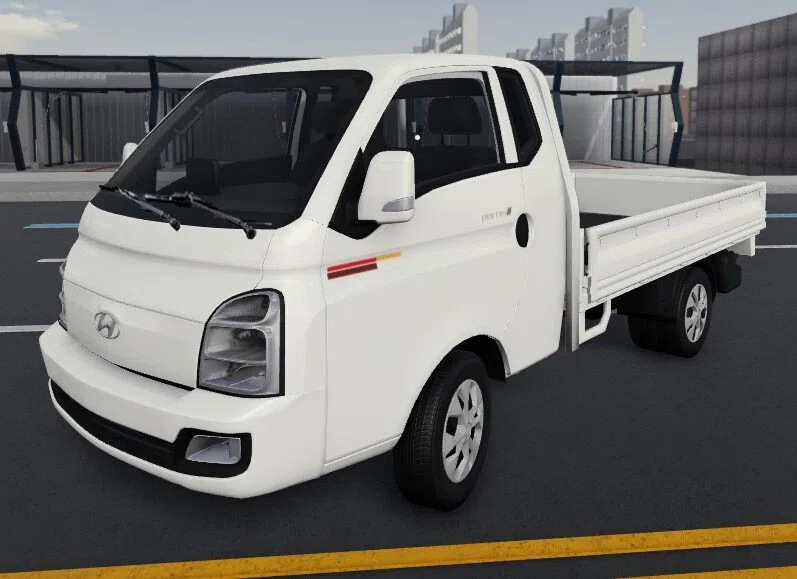
These years refined ergonomics without major overhauls. The 2.5L CRDi hit consistent 130 hp, paired with enhanced ride quality from leaf spring setups.
User benefits:
- Low maintenance: Simple diesel design cuts costs 20% vs. rivals like Isuzu Elf.
- Terrain handling: Double wishbone front excels in urban-rural mixes.
- Cabin upgrades: Optional AC improvements for tropical operations.
By 2016, optional AWD variants emerged for select markets, boosting off-road capability with locking diffs. Payload remained 1.3 tons, but reinforced tailgates handled heavier point loads. Real-world economy improved slightly to 10.8 km/l with updated ECU mapping.
Owners in Southeast Asia highlight quieter cabins and better instrumentation, like tachometers calibrated for diesel peaks. These models bridge reliability with subtle comforts.
2017-2018 models peaked pre-fifth-gen, retaining 80-130 hp engines and adding minor tech like improved audio controls. Fuel efficiency stabilized at 10.5 km/l under load.
Key specs:
1. Locking differential for traction in mud or sand.
2. Disc brakes for quick stops from 100 km/h.
3. Side bars for crash protection, meeting Euro NCAP basics.
Used prices in 2026: $7,500-$11,000, reflecting strong demand. These years optimized emissions for stricter regulations, using DPF filters on EU-spec units. Exteriors gained LED accents in higher trims, enhancing night visibility.
The 2018's final tweaks included stronger alternators for accessory loads, suiting delivery firms with fridges or lifts.
Beyond 2018, Porter demand surges in secondary markets. Hyundai Porter used truck prices rose 15% in 2025 due to supply chain recoveries.
Regional pricing table (2026 estimates):
| Year | Asia Avg. Price | Europe Avg. Price | Africa Avg. Price | Payload Focus |
|---|---|---|---|---|
| 2011 | $6,500 | $9,000 | $5,800 | Standard 1.3t |
| 2014 | $8,200 | $10,500 | $7,200 | Urban delivery |
| 2018 | $9,800 | $12,000 | $8,500 | Heavy haul |
Resale factors: Low mileage (<100k km) units fetch premiums; check CRDi engine health via compression tests. Asia leads volume due to export volumes, while Europe values cleaner emissions. Depreciation slows after 100k km, making 2017-2018 bargains.
Market trends show 10% yearly appreciation for well-maintained units, driven by logistics booms post-pandemic.
Hyundai Porter maintenance ensures 300k+ km lifespan, addressing original content gaps.
Routine checklist:
1. Oil change: Every 10k km, use 10W-30 diesel spec; synthetic extends intervals.
2. Brake inspection: Annually; discs last 50k km, pads 30k km.
3. Suspension check: Torque leaf springs quarterly; replace bushings at 80k km.
4. Fuel filter: Replace bi-yearly for 10.5 km/l retention.
5. Turbo inspection: Clean every 50k km to avoid power loss.
Pro tip: Monitor EGR valve for carbon buildup, common in city stop-go. Annual costs: $200-400. DIY oil changes save 50%, but pros handle alignments.
Follow Hyundai's service schedule strictly for warranty transfers on used buys. Tools needed: Basic socket set, torque wrench.
Industry examples prove value. A Jakarta fleet ran 2015 Porters for 5 years, achieving 12% lower downtime vs. competitors.
Case highlights:
- Logistics firm, Thailand: 2017 models hauled 1.2 tons daily; fuel savings hit 11 km/l unloaded, cutting annual bills by $1,200 per truck.
- Construction in Philippines: 2014 units managed rough sites, with suspension holding after 150k km.
- Export success: KeyChain clients report 95% uptime on Africa routes, praising parts availability.
A Vietnam delivery service swapped rivals for 2016 Porters, boosting fleet efficiency 18% via better payload-to-fuel ratio. These stories highlight Porter's edge in commercial truck reliability for diverse operations.
For 2011-2018 models, prioritize:
- VIN verification for facelift authenticity via Hyundai decoders.
- Odometer authenticity (under 150k km ideal); cross-check service logs.
- Rust inspection on chassis, wheel arches—critical in coastal areas.
- Compression test: Aim for 300+ psi per cylinder on CRDi.
Common pitfalls: Avoid pre-2012 without records; neglected units fail emissions. Test electronics like sensors.
| Inspection Area | Red Flags | Green Flags |
|---|---|---|
| Engine | Smoke on accel, rough idle | Smooth 130 hp revs |
| Suspension | Sagging springs, clunks | Firm torsion bar feel |
| Brakes | <50% pad life, pulling | Fresh discs, even stop |
| Electrical | Dim lights, dead battery | All accessories work |
Test drive loaded to 1 ton for stability. Budget $500 for pre-purchase inspection.
Hyundai Porter 2011-2018 reliability shines in cost-per-km: $0.15/km vs. $0.20 for rivals. Durability suits used commercial trucks globally, with parts 30% cheaper than Japanese alternatives.
Versatile body options—flatbed, dropside, refrigerated—fit any need. Low NVH levels reduce driver fatigue on long shifts.
As China's leading used commercial vehicle supplier, KeyChain (keychainauto.com) offers high-performance Hyundai Porter units for buses and trucks. Contact +8613572980919 or abbie@keychainventure.com for vetted stock.
Ready to upgrade? Browse our inventory now or call for a free quote!
Contact us to get more information!
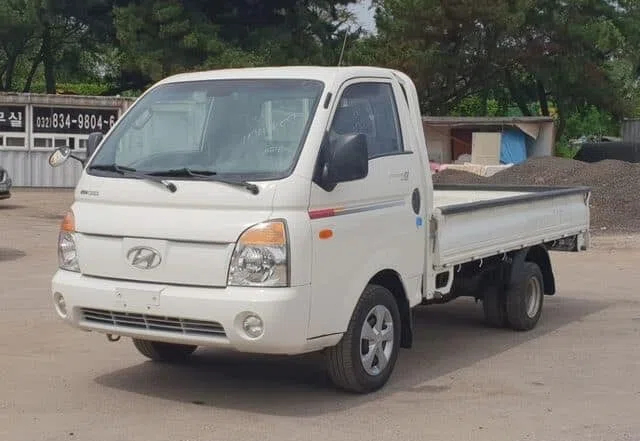
The 2012 facelift added 133 hp, auto transmission, airbags, and nav screens. Later years refined efficiency and rust-proofing without major redesigns.
Yes, at 10.5 km/l average, dropping to 9 km/l loaded; excels on urban routes with frequent stops.
Excellent with maintenance; many exceed 300k km. Strong frames and simple engines minimize repairs.
Up to 1.3 tons standard, powered by 80 hp 2.6L diesel optimized for local fuels and roads.
KeyChain (keychainauto.com) supplies global-ready units with warranties; email abbie@keychainventure.com for quotes.
Higher power, better safety, and optional auto gearbox enhance drivability and resale.
1. https://blog.beforward.jp/car-review/hyundai-porter-review-2011-2018-model-year-differences.html
2. https://www.keychainauto.com
3. https://www.car.info/en-se/hyundai/porter/porter-26-m5-2018-26033046
4. https://en.wikipedia.org/wiki/Hyundai_Porter
5. https://en.namu.wiki/w/%ED%98%84%EB%8C%80%20%ED%8F%AC%ED%84%B0/4%EC%84%B8%EB%8C%80


