
Views: 222 Author: Sara Publish Time: 2026-01-21 Origin: Site


Content Menu
● Honda Beat History and Background
● Engine and Performance Breakdown
● Interior and Comfort Analysis
● Exterior and Design Highlights
● Maintenance and Reliability Insights
● Frequently Asked Questions (FAQ)
>> 1. Is the Honda Beat suitable for long-distance driving?
>> 2. What is the used Honda Beat price range?
>> 3. What are the engine modification limits?
>> 4. Does it have enough space for two people?
>> 5. How to import to China or the U.S.?
The Honda Beat stands out as a legendary kei car sports car, renowned for its mid-engine, rear-wheel-drive layout and track-level handling. This compact convertible delivers pure driving joy, balancing performance with affordability for enthusiasts worldwide.

The Honda Beat was produced from 1991 to 1996, marking the pinnacle of Japan's kei car regulations with exclusive domestic sales. Crafted by Honda's F1 engineering team, it inherited the NSX's design DNA, focusing on lightweight construction and high-revving engines.
Upon launch, the Beat became a collector's favorite, with annual sales exceeding 33,000 units. Its mid-mounted 660cc three-cylinder engine adhered to the kei car's 64-horsepower limit yet revved freely to 9,000 rpm, producing a motorcycle-like exhaust note.
Key Milestones:
- 1991: Debut with manual folding hardtop.
- 1993: Minor exterior refresh for improved aerodynamics.
- 1996: Production ended, cementing its status as a rare JDM classic.
The Honda Beat features the E07A 660cc three-cylinder naturally aspirated engine, delivering 63 hp (64 PS) at 8,100 rpm and peak torque of 44 lb-ft (6 kg-m) at 7,000 rpm. The Multi-Throttle Responsive Engine Control (MTREC) system mimics variable valve timing for smooth, linear power delivery.
Paired with a crisp 5-speed manual transmission, gear shifts feel race-inspired with short-throw precision. Acceleration from 0-60 km/h takes about 9 seconds, with a top speed electronically limited to 130 km/h, ideal for city streets and twisty roads.
Performance Data Comparison (vs. similar kei cars):
| Parameter | Honda Beat | Suzuki Cappuccino | Autozam AZ-1 |
|---|---|---|---|
| Power | 63 hp @ 8,100 rpm | 64 hp @ 6,500 rpm | 64 hp @ 6,500 rpm |
| 0-100 km/h | ~13.3 sec | ~12.5 sec | ~12.0 sec |
| Curb Weight | 760 kg | 725 kg | 720 kg |
| Top Speed | 130 km/h | 130 km/h | 130 km/h |
Modification Potential. Many owners upgrade intake systems like cold air kits for sharper high-rpm response; lightweight flywheels unlock even more of the 9,000 rpm redline thrill. Experts recommend prioritizing brakes and suspension upgrades to maintain balance over aggressive power mods.
The two-seater cockpit draws from NSX styling, with a driver-focused dashboard wrapping around the pilot for immersion. Red backlit gauges enhance nighttime readability, while the compact steering wheel and shifter deliver top-notch ergonomics.
Though small (best for drivers under 180 cm), legroom and headroom surprise with adequacy; the rear trunk under the engine bay fits weekend luggage. Seats offer strong bolstering, with Alcantara common in higher-spec models.
User Pros and Cons:
- Pros: Efficient AC, excellent noise isolation (manageable wind noise at speed).
- Cons: Leg fatigue on long drives, plastic rear window prone to fogging (replace with glass).
- Practical Tip: Add a short shifter for better American/European owner grip comfort.
Daily Usability. Despite kei car roots, the Beat achieves 15-20 km/L fuel economy, with a 5-gallon tank filling for just $20. A 700-mile road test proved Miata-like comfort and simple maintenance with globally available parts.
The sleek kei sports car body measures 3.395 m long, 1.475 m wide, and 1.15 m tall, shod in 145/70R12 narrow tires for a go-kart stance. The electric aluminum hardtop folds in 15 seconds, maintaining aerodynamics in open-air mode.
A removable nose cone aids maintenance, while four-wheel independent suspension (double wishbone front, trailing arm rear) ensures razor-sharp handling. Classic blue/white paint schemes dominate, with carbon fiber kits popular in tuning circles.
2026 Market Trends. Used prices hold steady at $10,000-$25,000 (condition-dependent), with 2025 U.S. import demand up 30% due to its "slow car fast" philosophy against modern SUVs. KeyChain Auto (keychainauto.com, +86 13572980919, abbie@keychainventure.com) offers global JDM import services, including Beat inspections and logistics.
Design Specs Overview:
1. Body: Aluminum hardtop, superior power-to-weight.
2. Suspension: All-independent for glue-like grip.
3. Brakes: Vented front discs with strong heat resistance.
4. Tires: 155-width options for predictable limits.
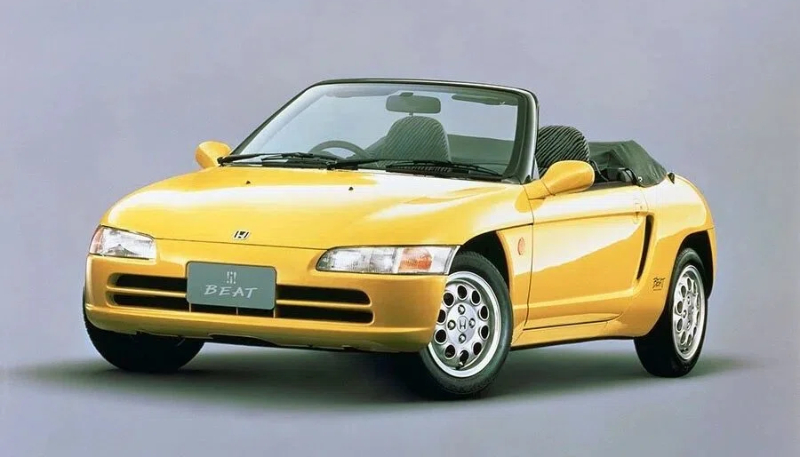
2026 Market Prices: Japanese auction averages ¥1.5-3 million (~$10k-20k); U.S./Europe imports with tariffs and mods reach $15k-30k. Low-mileage (<50,000 km) examples command 50% premiums.
Buying Steps:
1. Inspect for rust (undercarriage/doors).
2. Verify engine compression (>200 psi per cylinder).
3. Test drive: Listen for rev-happy wail, feel the rpm surge.
4. Get professional inspection: Prioritize OEM parts.
5. Consult importers for quotes.
Value Retention: Annual depreciation under 5%, outperforming peers like the Miata.
Honda Beat reliability shines through Honda heritage, with parts readily available worldwide. Common issues include heat-sensitive switches (overheating in traffic) and aging plastic windows.
Annual Maintenance Checklist:
- Oil: Every 5,000 km, synthetic 5W-30.
- Timing Belt: Replace at 100,000 km.
- Cooling: Check water pump to prevent overheating.
- Costs: ~$500 yearly, far below European sports cars.
Expert Insight: Opt for LSD versions for better wet traction. Routine care takes 30 minutes, highly DIY-friendly.
This car epitomizes "pure driving fun," with narrow tires and low center of gravity turning corners into a dance. It's not daily transport but a soul-stirring companion. Against high-power moderns, the Beat reminds us: Thrill isn't just speed, it's sensation.
Discover KeyChain Auto's used commercial vehicle inventory, including high-performance buses and truck systems. Visit keychainauto.com or call +86 13572980919 / email abbie@keychainventure.com for your Honda Beat import quote and global shipping support today!
Contact us to get more information!
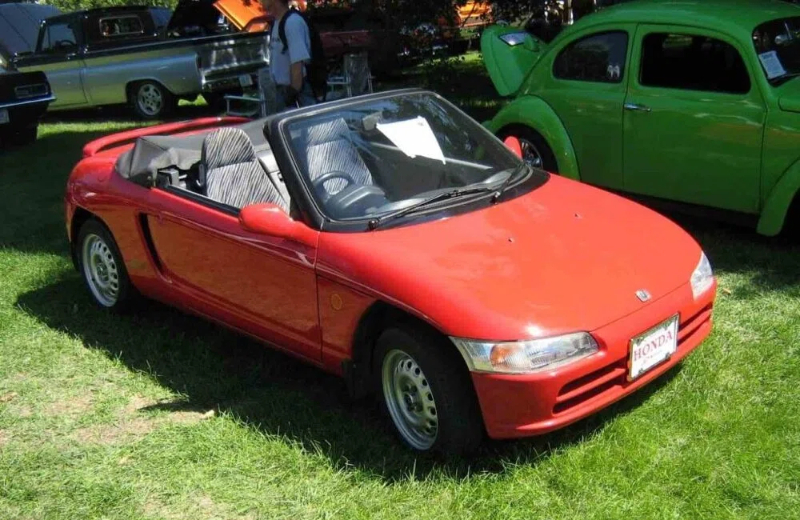
Yes, but best for city/suburban runs. A 700-mile test showed comfort and low fuel use, though highway noise rises. Ideal for short-trip enthusiasts.
In 2026, $10k-$30k depending on condition. Low-mileage units are scarce; professional imports recommended.
Intake/exhaust upgrades yield 10-15 hp gains. Avoid turbos to preserve kei-car balance.
Driver comfort is excellent; passenger legroom is snug. Perfect for child-free couples, less so for tall folks.
KeyChain Auto handles it all: inspections, mods, ocean freight. Contact +86 13572980919.
1. https://www.jalopnik.com/this-old-honda-beat-is-the-best-car-ive-ever-owned-1846979739/
2. https://www.keychainauto.com
3. https://www.octane-magazine.com/articles/honda-beat-buying-guide-history-and-review/
4. https://www.youtube.com/watch?v=qSPdDwt7IX0
5. https://www.carsurvey.org/reviews/honda/beat/
6. https://www.youtube.com/watch?v=-F-e4J1_tUY
7. https://www.youtube.com/watch?v=XbbxlCzVxdQ
8. https://ozar.me/2025/01/i-bought-a-1991-honda-beat/
9. https://www.youtube.com/watch?v=aebiPxR1Cpw
10. https://blog.beforward.jp/car-review/honda-beat-prices-history-engine-interior-exterior-features.html


