
Views: 222 Author: Keychain Venture Publish Time: 2026-04-19 Origin: Site


Fuel economy is no longer only a driver's issue. For passenger cars, buses, and heavy-duty trucks, it is now a fleet strategy, a cost-control lever, and a sustainability priority. Whether you operate a private car, a city bus, or a long-haul truck, improving fuel economy can cut operating costs, reduce downtime, and support cleaner mobility.
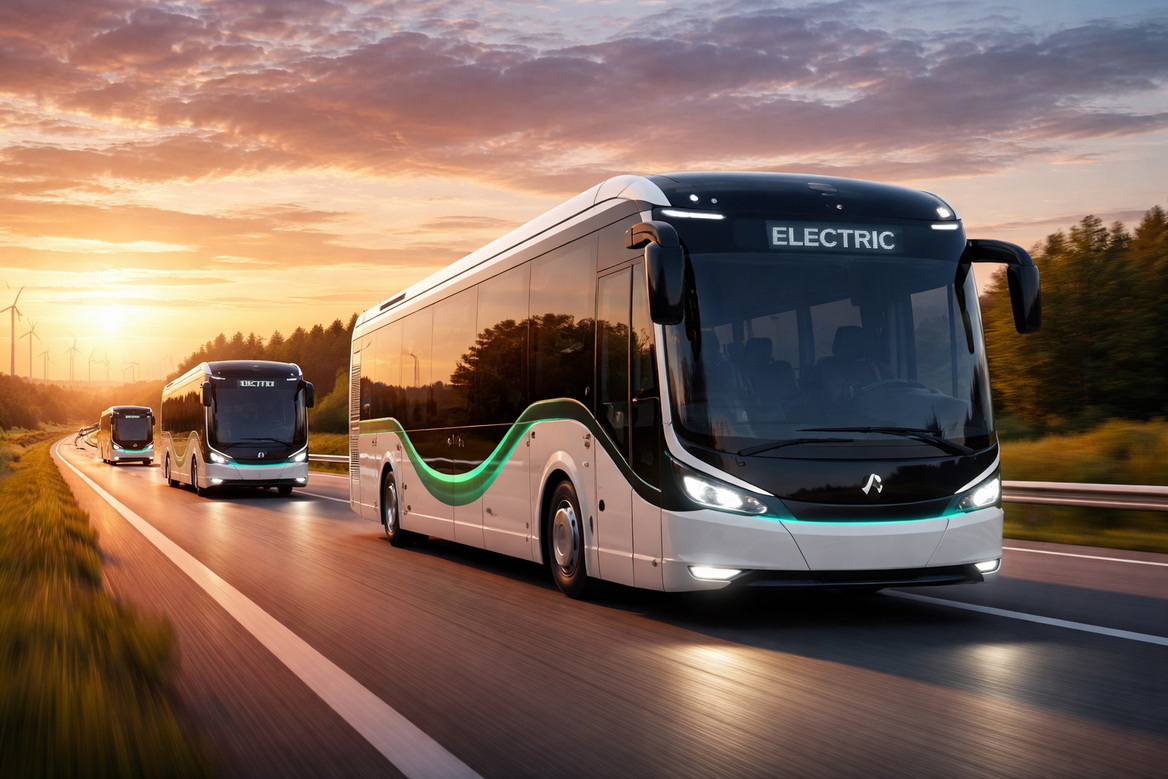
Fuel prices, tighter emissions rules, and rising fleet operating costs have made efficiency a top concern for both individuals and transport operators. The EPA's Phase 3 heavy-duty greenhouse gas standards apply to tractors and vocational vehicles, including transit and school buses, starting in model year 2027, showing how strongly efficiency now shapes vehicle development and fleet decisions.
For a commercial fleet, even a small efficiency gain can translate into major annual savings. For an EV or hybrid fleet, the same logic applies: better energy use means lower electricity consumption, less strain on components, and better total cost of ownership.
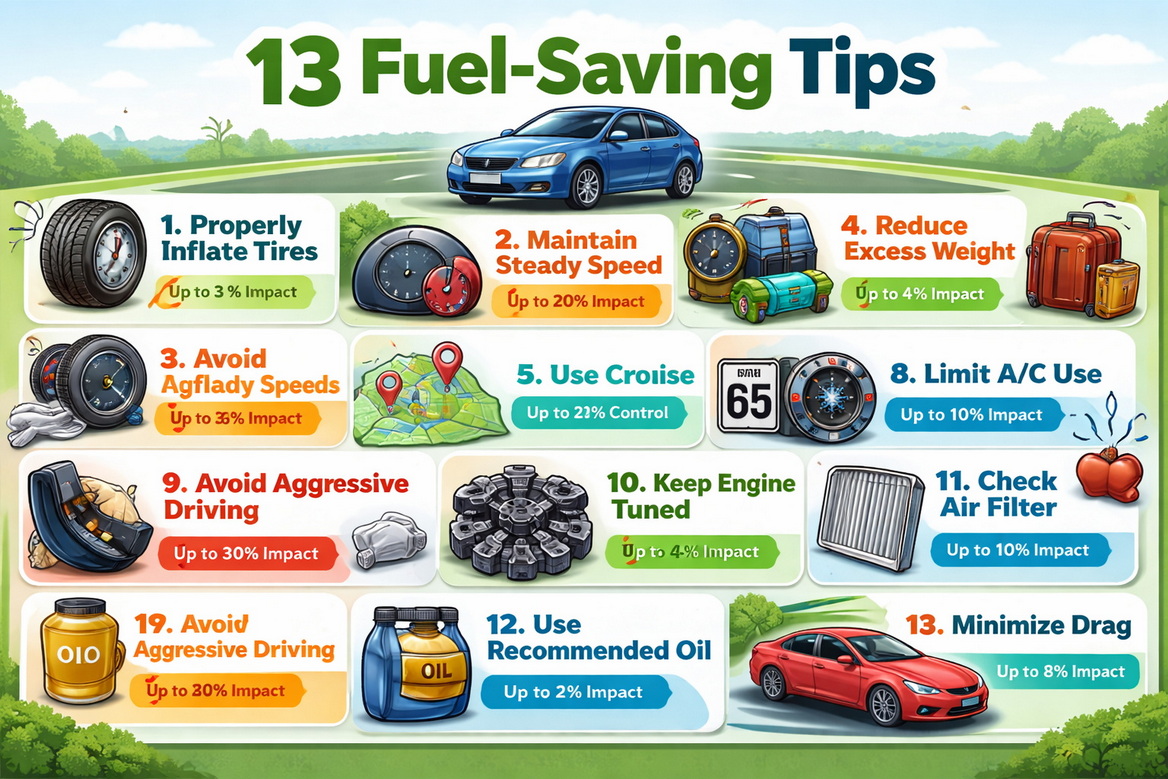
Under-inflated tires increase rolling resistance and waste energy. Evans Halshaw notes that correct tire pressure can improve economy by up to 2.5%, while tire labels and low-rolling-resistance designs can further improve efficiency.
For buses and trucks, this matters even more because tire rolling resistance is a significant part of total road energy use. A practical fleet habit is to check tire pressure daily or at least before every long shift.
Looking further ahead reduces unnecessary braking and acceleration. Smooth traffic reading is one of the easiest ways to reduce fuel use and is especially valuable in stop-and-go urban routes where buses and delivery vehicles spend much of their time.
A simple rule works well: lift off early, coast in gear, and avoid sudden stops whenever safe. This saves fuel and also reduces wear on brakes and tires.
Aggressive driving is expensive. Synchrony reports that aggressive driving can reduce gas mileage by up to 40%, which shows how much fuel is lost through harsh throttle use and hard braking.
For heavy vehicles, smooth driving also improves passenger comfort, cargo stability, and route consistency. Training drivers to accelerate steadily and brake progressively is one of the highest-return fleet interventions.
Idling burns fuel while moving nothing. Evans Halshaw highlights that stop/start technology helps reduce waste, while fleet guidance consistently identifies idle reduction as a core fuel-saving practice.
For buses, coaches, and trucks, idling control can be supported with driver policy, telematics alerts, and automatic engine shutdown tools. This is a fast win because it requires no major vehicle redesign.
Speed has a direct impact on fuel burn. Evans Halshaw notes that driving at 80 mph instead of 70 mph can use about 10% more fuel, and Synchrony also reports higher speed significantly increases cost per gallon.
For fleet operators, speed governance is one of the most effective cost controls. Telematics data can reveal where overspeeding is happening and link it to fuel waste, harsh driving, and avoidable risk.
Cruise control helps maintain a steady speed on open roads, which reduces small speed fluctuations that waste fuel. It works best on highways and long straight routes, not in dense traffic or on steep hills.
For intercity buses and long-haul trucks, cruise control can improve consistency and reduce driver fatigue. The key is to use it where the road profile allows stable operation.
Running the engine at the wrong rpm wastes fuel. Evans Halshaw points out that over-revving or lugging the engine both hurt efficiency, so selecting the correct gear is a basic but important habit.
In commercial vehicles, gear discipline matters even more because poor shifting can increase fuel consumption across hundreds of kilometers per day. Driver coaching and automated transmission tuning both help here.
The heavier the vehicle, the more energy it needs to move. Evans Halshaw recommends removing roof boxes and extra cargo, and fleet guidance also emphasizes reducing avoidable payload where possible.
For commercial fleets, this means reviewing onboard tools, unused equipment, and unnecessary materials. Every kilogram matters more when the vehicle covers high annual mileage.
Roof boxes, open windows at speed, and external carriers all increase drag. Evans Halshaw notes that removing these items improves economy, especially at motorway speeds.
For buses and trucks, aerodynamic improvements such as fairings, streamlined mirrors, and trailer side skirts can deliver meaningful gains. This is why aerodynamics is a major design focus in heavy-duty efficiency programs and truck development.
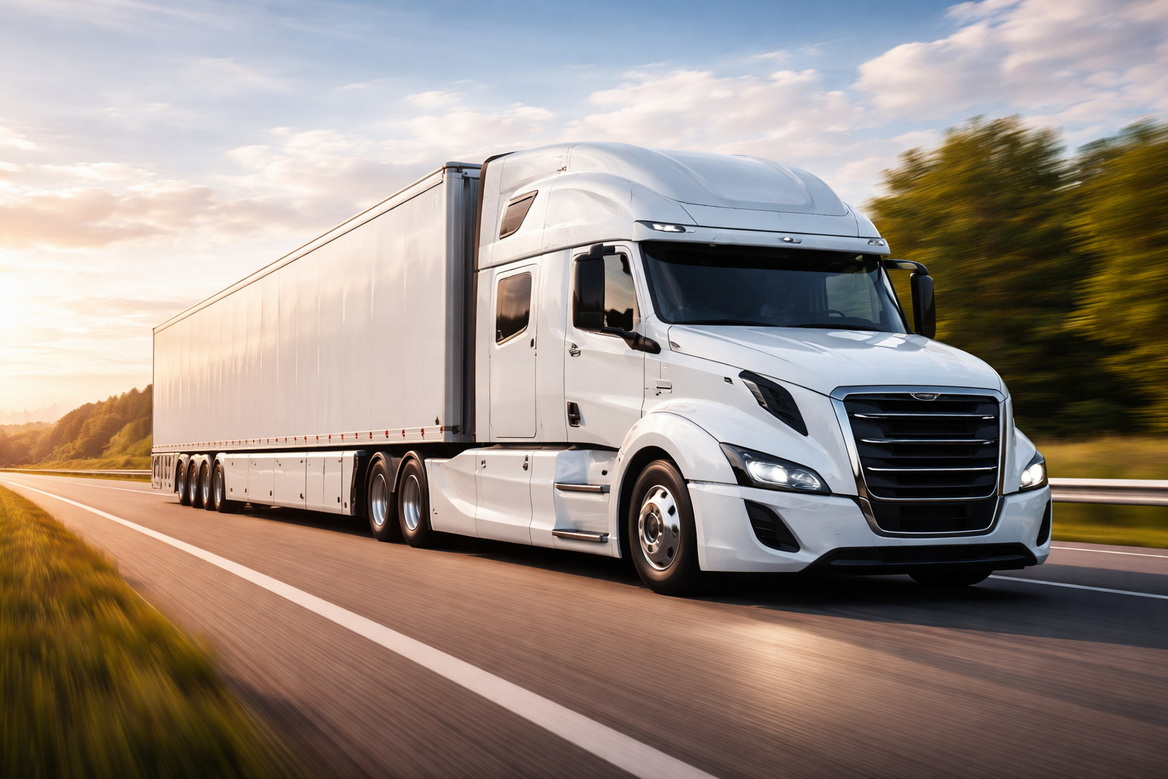
A well-serviced vehicle uses fuel more efficiently. Evans Halshaw notes that regular servicing, correct fluids, and wheel alignment all support economy and reliability.
For fleet owners, preventive maintenance is not only about breakdown prevention. It also protects fuel efficiency by keeping engines, tires, brakes, and driveline systems operating as intended.
Climate control draws energy, which can affect fuel use. Evans Halshaw explains that air conditioning can raise consumption, especially in city driving, while the drag from open windows can be worse at higher speeds.
The practical takeaway is simple: use climate systems intelligently. In stop-start traffic, minimize unnecessary cooling demand; on highways, prefer closed windows and efficient HVAC use.
Shorter is not always faster, and faster is not always more efficient. Route planning can reduce congestion, idle time, and repeated acceleration, all of which waste fuel.
For fleets, route optimization software can combine traffic, delivery windows, and vehicle type to reduce total cost per trip. This is one of the easiest ways to improve fuel economy without changing the vehicle itself.
Evans Halshaw's original article ends with the idea of choosing a hybrid, and that is still relevant today. Hybrid and electric drivetrains can reduce fuel use by using regenerative braking, electric assist, and smarter energy management.
For buses and heavy vehicles, electrification is especially powerful when routes are predictable and charging is manageable. The latest heavy-duty standards also reinforce the industry shift toward more efficient and lower-emission powertrains.
Passenger-car advice is useful, but fleets need a system. The biggest gains usually come from combining driver training, telematics, preventive maintenance, speed control, and route optimization into one operating model.
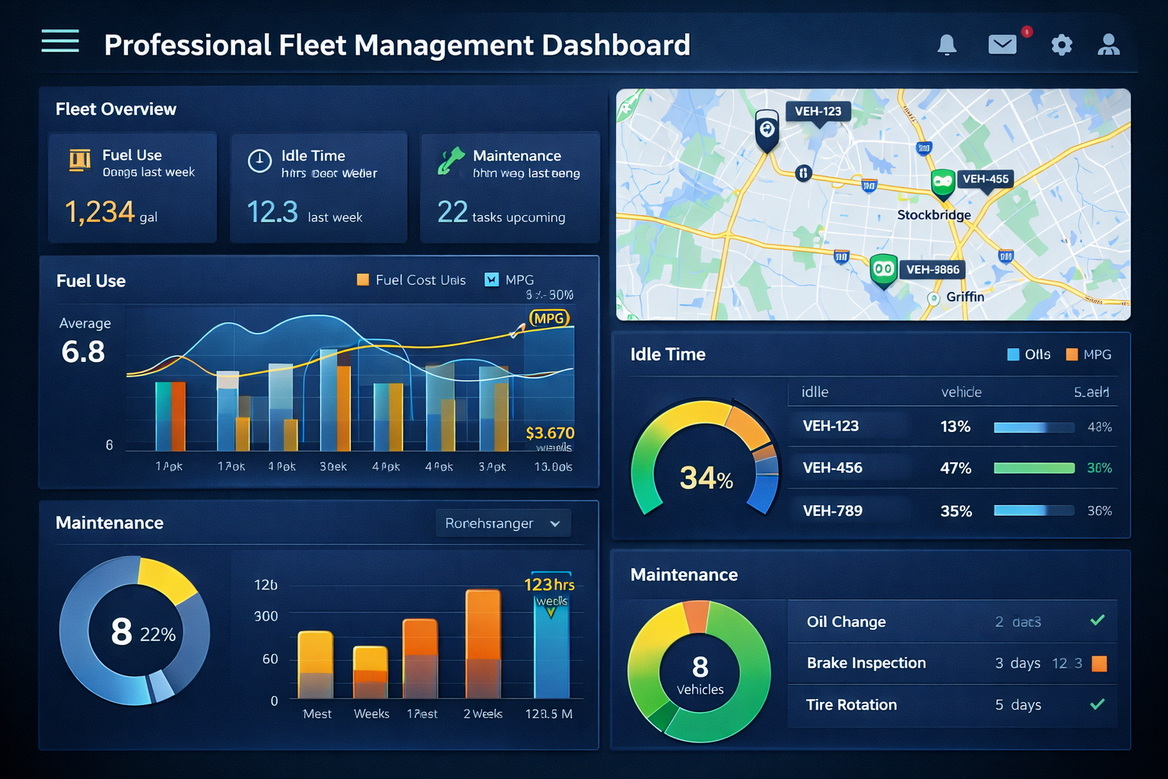
A practical fleet efficiency program should include:
- Weekly tire checks for pressure and wear.
- Idle-time tracking with telematics.
- Driver coaching for smooth acceleration and braking.
- Route reviews to remove congestion-heavy paths.
- Maintenance audits for alignment, lubrication, and engine health.
For buses and heavy trucks, this integrated approach often produces more savings than any single "fuel-saving tip." It also improves punctuality and extends component life.
For new energy vehicles, "fuel economy" becomes energy economy. The same principles still apply: lighter loads, better aerodynamics, smoother driving, and smarter route planning all improve range and lower charging demand.
Recent industry analysis shows that EV efficiency varies widely even within the same weight class, which means design and operating discipline both matter. Better powertrains, reduced weight, and improved auxiliary systems can lower energy use and improve total operating performance.
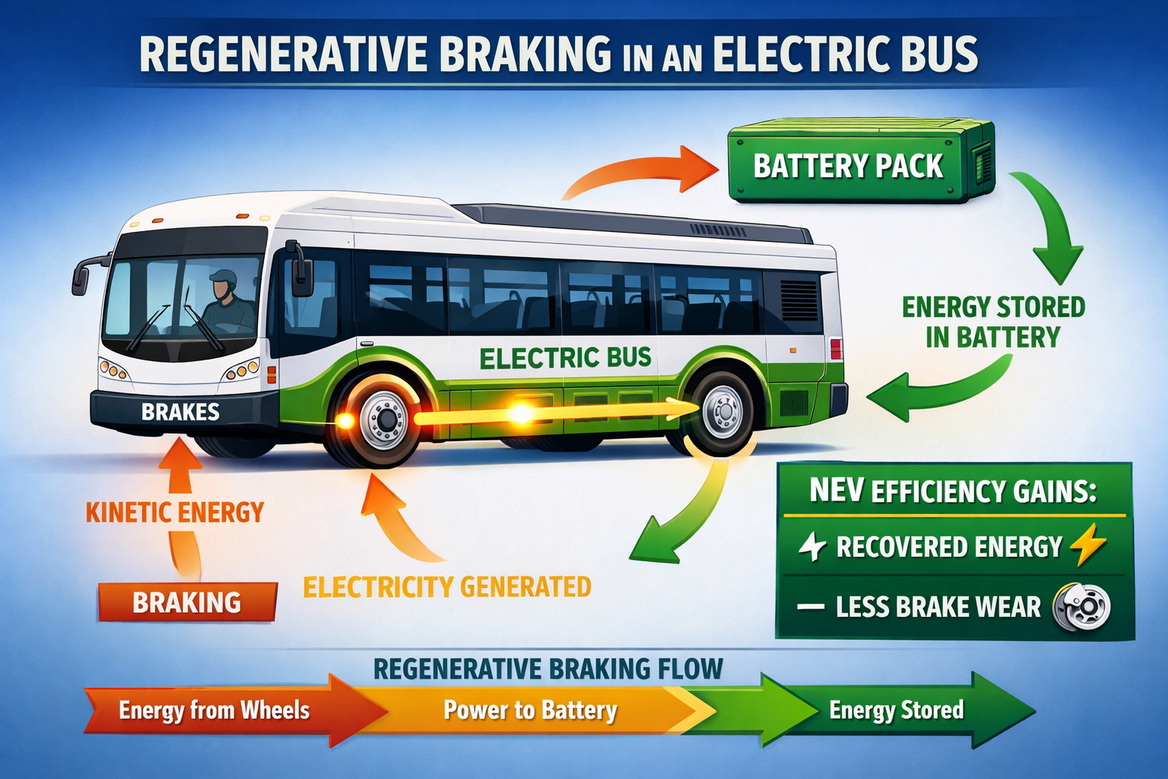
A city bus operator can improve efficiency without replacing the whole fleet by combining three changes:
1. Train drivers to brake earlier and accelerate gently.
2. Reduce idle time at terminals and depots.
3. Check tire pressure and wheel alignment on a fixed schedule.
That combination can lower fuel or electricity use, improve route reliability, and reduce maintenance pressure. It is also easier to implement than a full fleet replacement.
If your goal is to reduce operating cost, start with the actions that are easiest to control:
- Tire pressure.
- Idling reduction.
- Driver behavior.
- Route planning.
- Regular maintenance.
For bus and truck operators, the next step is to evaluate whether your current fleet mix is optimized for efficiency, payload, and route profile. That is where OEM specification, powertrain choice, and total cost of ownership become critical.
Contact us to get more information!
The fastest wins usually come from correct tire pressure, smoother driving, and less idling. These changes can be implemented immediately without buying new vehicles.
No. Cruise control is most effective on flat highways and long open roads. In heavy traffic, on hills, or in stop-and-go conditions, it may not help much.
Evans Halshaw notes that driving at 80 mph instead of 70 mph can use about 10% more fuel. Higher speed also increases safety risk and operating cost.
Yes. In commercial vehicles, the same principles matter even more because fuel is a major operating expense and mileage is high. Aerodynamics, tire pressure, idling, and route planning are especially important.
For EVs, the goal is to improve energy efficiency and range rather than fuel economy. Smooth driving, reduced drag, lower vehicle weight, and smart route planning all help extend range.
1. Evans Halshaw, "13 Ways to Improve Fuel Economy and Save Money." https://www.evanshalshaw.com/blog/13-way-to-improve-fuel-economy-and-save-money/
2. EPA, "Final Rule: Greenhouse Gas Emissions Standards for Heavy-Duty Vehicles – Phase 3." https://www.epa.gov/regulations-emissions-vehicles-and-engines/final-rule-greenhouse-gas-emissions-standards-heavy-duty
3. ACEEE, "Boosting EV Efficiency Would Cut Emissions and Reduce Grid Strain." https://www.aceee.org/blog-post/2023/04/boosting-ev-efficiency-would-cut-emissions-and-reduce-grid-strain
4. Michelin Connected Fleet, "2025 Fleet Outlook: Trends to Optimize Truck & Trailer Management." https://connectedfleet.michelin.com/en-us/blog/2025-fleet-outlook-trends-to-optimize-truck-trailer-management
5. PS Energy, "7 Fleet and Fuel Management Trends to Watch in 2025." https://blog.psenergy.com/7-fleet-and-fuel-management-trends-to-watch-in-2025
6. National Academies, "Vehicle Technologies for Reducing Load-Specific Fuel Consumption." https://www.nationalacademies.org/read/12845/chapter/7
7. TruckingResearch. org, "Part 2 – Sustainable Vehicle Practices." https://truckingresearch.org/sustainable-vehicle-practices-2/
8. Synchrony, "13 Tips To Help You Save Money on Gas." https://www.synchrony.com/blog/automotive/tips-to-save-money-on-gas
9. Metro Magazine, "Heavy-duty vehicle fuel efficiency standards unveiled." https://www.metro-magazine.com/news/heavy-duty-vehicle-fuel-efficiency-standards-unveiled


