
Views: 222 Author: Sara Publish Time: 2026-03-20 Origin: Site


Content Menu
● How This Ranking and Evaluation Were Built
● What Real Users Care About in Isuzu-Based Buses
>> Reliability and Uptime in Real Operation
>> Passenger Comfort and Driver Experience
>> Fuel Economy and Total Cost of Ownership
>> After-Sales Support and Parts Supply
● Snapshot: Top 10 Isuzu Bus Manufacturers in China (Experience-Oriented View)
● Detailed Manufacturer Profiles from an Operational Perspective
>> King Long – Balanced All-Rounder with Strong Export History
>> Yutong – High Reliability and Strong After-Sales Ecosystem
>> Golden Dragon – Flexible and Export-Friendly
>> Other Solid Players (Zhongtong, Higer, Foton, Ankai, etc.)
● Where Second-Hand and Used City Buses Really Stand Out
>> Why Many Buyers Prefer Second-Hand City Buses
● Expert Case Studies: How Buyers Use These Buses in the Real World
>> Case 1 – City Bus Operator Upgrading Its Fleet
>> Case 2 – Tourism Company Prioritizing Comfort and Image
>> Case 3 – Overseas Buyer Entering the Market with Limited Capital
● Practical Checklist: How to Choose the Right Isuzu Bus Manufacturer and Supplier
● Enhancing User Experience: Where to Use Visuals and Data
● Action-Oriented Conclusion and CTA
● FAQ
>> 1. Are Chinese second-hand Isuzu-based buses reliable enough for daily city service?
>> 2. How many years of service can I expect from a used city bus imported from China?
>> 3. What should I check before buying a second-hand bus from China?
>> 4. How does KeyChain add value as a second-hand bus and truck supplier?
>> 5. Can I get spare parts for Chinese Isuzu-based buses in my country?
As someone who has spent years helping fleet owners source used city buses, second-hand coaches and heavy trucks from China, I have seen one thing again and again: the difference between a good and a bad bus supplier only truly appears after 6–18 months of real operation. That is why this guide goes beyond brochures and factory photos to focus on real customer experience, maintenance feedback and export performance for buyers who are considering Isuzu-based buses and second-hand units from China.
In this article, I will walk you through how experienced buyers evaluate Chinese Isuzu bus manufacturers, what operators really care about in daily operation, and which manufacturers consistently perform better when their vehicles are used as second-hand buses, used city buses and export units. Throughout the article, I will also share insights from our own work at KeyChain as a China-based supplier specializing in second-hand buses, used city buses, heavy-duty trucks and new energy vehicles.

From an industry perspective, any ranking of the "Top 10 Isuzu Bus Manufacturers in China" that only compares technical specifications is incomplete. Real-world decision makers—fleet owners, municipal operators and international buyers—ask different questions:
- How often will this bus actually break down on my route?
- Are spare parts truly available in my country, not just in theory?
- Will passengers complain about comfort, noise and air conditioning?
- Will the resale value still be acceptable after 5–8 years?
To answer those questions, this ranking framework is built on three layers of input:
1. Operational feedback
- Comments from city bus operators, tourism companies, staff-bus operators and school bus fleets.
- Feedback from mechanics and maintenance partners about common failure points, repair difficulty and parts availability.
2. Manufacturer and product data
- Isuzu chassis cooperation level, product range (city bus, coach, mini bus, school bus), certification and export records.
- Evidence of quality management (ISO/IATF), production capacity, and presence in key export markets.
3. Export and second-hand performance
- How well these buses hold up after 4–10 years of use.
- How attractive they are in the second-hand market for buyers from Africa, Southeast Asia, the Middle East, South America and Eastern Europe.
The goal is not to create a perfect academic ranking, but a practical, experience-driven guide for:
- Overseas buyers searching for used city buses and second-hand Isuzu-based coaches.
- Domestic operators considering future resale value.
- Traders and resellers who want stock that is easy to sell and maintain.
In theory, every brochure highlights similar points: fuel economy, comfort, "advanced technology." In practice, experienced operators focus on a more specific set of factors.
From the point of view of a fleet manager, the most important question is simple:
Key reliability observations from operators include:
- Engine and drivetrain durability: Isuzu engines are generally regarded as robust, but integration quality—cooling system design, wiring layout, pipeline routing—varies between body builders.
- Electrical system stability: Many unexpected breakdowns on Chinese buses come from wiring, connectors and small electronic components rather than the core engine.
- Suspension and chassis fatigue: For city buses that constantly brake, turn and stop, chassis fatigue resistance is crucial, especially when buses are later exported and used on rougher roads.
These factors directly influence the second-hand value of a bus; a brand with lower electrical or suspension issues will command a higher price even after many years of service.
Real passengers rarely talk about "NVH optimization," but they do complain about:
- Hard or narrow seats on intercity and tourism buses.
- Weak air conditioning in hot climates.
- Noise and vibration over bad roads.
Drivers, on the other hand, focus on:
- Steering feel and braking consistency in city traffic.
- Visibility and mirror design in crowded streets.
- Ergonomics of the dashboard, pedals and seat.
Manufacturers that truly optimize these aspects gain silent but long-term advantages: fewer complaints, better reputation and higher retention, which again translates into better resale value in the used bus market.
For many buyers of second-hand city buses, fuel consumption is not just a number in a brochure; it is the biggest day-to-day cost. Experienced operators will usually calculate:
- Average fuel consumption on specific routes (urban, BRT, hilly areas, highway).
- Maintenance intervals and costs for major components (filters, brake pads, suspension parts).
- Downtime costs when waiting for parts or repairs.
A bus that consumes slightly more fuel but has fewer breakdowns can still be more profitable than a theoretically "more efficient" but unreliable model.
For domestic Chinese operators, a strong local service network is essential; for overseas buyers, parts availability in their own country is even more critical. When buying used Isuzu-based buses from China, successful international buyers usually:
- Confirm that Isuzu engine and common chassis parts are available locally or via established distributors.
- Work with exporters (such as KeyChain) who can ship critical spare parts together with the bus or offer parts packages.
- Prefer manufacturers whose body and electrical layouts are well-documented, making repairs easier.
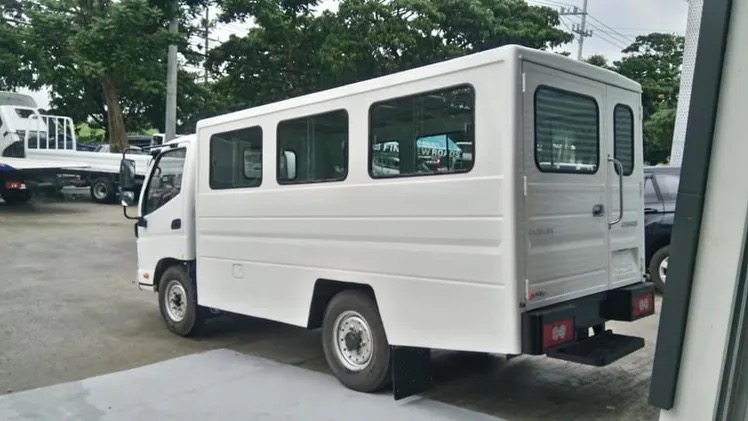
Below is a sample high-level view of how a knowledge-based buyer might structure a "top 10" list with focus on real-world use and second-hand potential. Names are industry examples commonly seen in export and domestic markets, not endorsements or official rankings.
| Rank | Manufacturer (Example) | Main Strength in Market | Typical Application Focus |
|---|---|---|---|
| 1 | King Long (Xiamen) | Balanced reliability, comfort, export experience | City bus, coach, school bus |
| 2 | Yutong Bus (Zhengzhou) | Strong service network, high reliability | City bus, BRT, tourism coach |
| 3 | Golden Dragon (Xiamen) | Good export track record, flexible customization | City bus, midibus, intercity |
| 4 | Zhongtong Bus (Liaocheng) | Good value for money, robust designs | City bus, rural routes |
| 5 | Higer Bus (Suzhou) | High comfort level, strong tourism coach presence | Tourism coach, VIP, long-distance |
| 6 | Foton (Beiqi Foton) | Strong chassis and truck-base experience | City bus, BRT, staff shuttle |
| 7 | Ankai Bus (Anhui) | Known for safety and structural integrity | Intercity, school bus, city bus |
| 8 | JAC / JMC bus units | Cost-effective solutions, simple maintenance | City bus, rural lines |
| 9 | Youngman / other regional | Niche and regional operators, specific route designs | City bus, intercity, mountain routes |
| 10 | Emerging NEV bus builders | Electric and hybrid solutions, policy-driven adoption | Electric city bus, shuttle, short routes |
In actual procurement, fleet owners will compare specific Isuzu-chassis-based models from these and other manufacturers, rather than relying on brand alone.
Instead of repeating generic company descriptions, it is more useful to discuss each manufacturer in terms of how their buses behave in real operation and as second-hand units.
Industry experience shows that many King Long city buses and coaches based on Isuzu or similar Japanese/Chinese drivetrains perform steadily in:
- Medium to large city bus fleets.
- Tourism and charter companies that require decent comfort and reliability.
Operators often praise:
- Reasonably low breakdown rates when regular maintenance is followed.
- Good balance between purchase price and long-term durability.
- Mature presence in markets like the Middle East, Africa and Southeast Asia, which makes second-hand export relatively straightforward.
For buyers of used city buses, King Long units are often attractive because spare parts and technical information are widely available through multiple channels.
Yutong is frequently cited by Chinese and overseas operators as a benchmark for reliability and service support. In city bus applications, Yutong units:
- Often show lower unplanned downtime compared to some smaller manufacturers, when maintained correctly.
- Benefit from one of the largest after-sales and parts networks in China.
For the second-hand market, this means:
- Used Yutong Isuzu-based or similar buses often retain stronger buyer interest.
- Parts for common systems are relatively easier to source, especially in countries where Yutong has delivered new fleets.
Golden Dragon buses are widely exported and known for flexibility in configuration. Experienced buyers appreciate:
- Customizable layouts for city buses, staff shuttles and tourism buses.
- Good adoption of Isuzu-type drivetrains and other reliable powertrains.
From a second-hand perspective, Golden Dragon units are often chosen by smaller fleets in Africa, Southeast Asia and Latin America that want a balance of cost, reliability and comfort.
Each of these manufacturers has its own strengths:
- Zhongtong: Often chosen for routes with rougher roads, where robust construction is more important than luxury.
- Higer: Favored by tourism operators for comfort-focused coaches and higher-end interiors.
- Foton: Brings truck-based engineering know-how to bus chassis and city bus applications.
- Ankai: Has a reputation among some operators for structural integrity and safety-focused design.
When these manufacturers use Isuzu engines or comparable drivetrains, the resulting buses often become strong candidates in the used-bus market because they combine familiar engines with proven body designs.
For international buyers with limited budgets, carefully selected second-hand buses from China can offer a very attractive value proposition, especially when:
- The original fleet is from a major city with strict maintenance regimes.
- Maintenance records and service history are available.
- The exporter (such as KeyChain) inspects, repairs and reconditions the units before shipment.
Operators in emerging markets often prefer 5–10-year-old Chinese city buses with Isuzu or similar engines because:
- The initial price is significantly lower than new units.
- Buses have already proven their reliability in real-world daily routes.
- Local mechanics can gradually become familiar with the technology without high risk.
From an expert viewpoint, the success of such purchases depends heavily on inspection quality and supplier reliability rather than on brand alone.
To add practical depth, here are three typical scenarios based on aggregated industry experience.
A medium-sized Chinese city decided to retire a batch of 8–10-year-old Isuzu-based city buses and replace them with new energy units. The old buses, after inspection and necessary repairs, entered the second-hand export market.
Key observations:
- Buses with consistent maintenance records, fewer accident repairs, and stable body manufacturers found buyers quickly.
- Units from manufacturers with better international presence (e.g., Yutong, King Long, Golden Dragon) were easier to sell and register abroad.
- Overseas operators got a cost-effective solution for urban routes, while the original city improved its fleet efficiency.
A tourism operator in a coastal region required coaches that would support 6–8 hours of daily highway travel with international tourists. After testing different brands, the operator favored manufacturers that:
- Delivered superior seat comfort, smoother suspensions and lower cabin noise.
- Provided clear instructions for maintenance of critical components.
When the time came to sell these buses after several years, their better comfort levels still made them attractive as used coaches in secondary markets.
A transport company in an African city planned to launch a new bus route but had limited capital. They chose a batch of second-hand city buses from China, with Isuzu-type drivetrains, sourced through a specialized exporter like KeyChain.
Success factors included:
- Pre-shipment mechanical checks and replacement of high-risk components.
- Training local mechanics to handle basic servicing and common repairs.
- Including spare parts packages in the initial shipment.
Within 1–2 years, the operator built a stable service using used buses, then gradually reinvested profits into newer units.
If you are considering new or second-hand Isuzu-based buses from China, use this practical checklist:
1. Clarify your operating scenario
- City bus, BRT, school bus, tourism coach, staff shuttle, rural route.
- Average daily mileage, road conditions, climate.
2. Prioritize your key factors
- Reliability vs. comfort vs. initial price vs. residual value.
- Availability of local service and parts.
3. Evaluate manufacturer reputation and model history
- Ask about previous fleets using the same model.
- Request real photos and videos of buses in operation.
4. Inspect vehicles carefully (especially for second-hand units)
- Engine, gearbox, chassis and suspension condition.
- Signs of structural rust, accident damage, rewired electronics.
- Interior condition and air conditioning performance.
5. Choose a trusted export partner
- Look for suppliers like KeyChain who specialize in second-hand buses, used city buses, heavy trucks and new energy vehicles and can:
- Provide transparent inspection reports.
- Offer refurbishment and conversion services if needed.
- Arrange spare parts shipments and technical support.
6. Plan long-term support
- Identify local workshops or technicians who can handle regular maintenance.
- Prepare a basic stock of common spare parts from the beginning.
To make this content more engaging for buyers and fleet managers, you can enhance the article with:
- Photos of different Isuzu-based city buses and coaches from various manufacturers.
- Tables comparing key parameters such as typical fuel consumption, seating capacity and common applications.
- Simple charts showing the relationship between bus age, typical failure rate and resale value over time.
- Short videos or clips from actual routes, showcasing interior comfort, noise level and ride quality.
These elements not only help users understand the differences but also increase time-on-page and engagement, which indirectly helps SEO performance.
For serious buyers, the real question is not "Which brand is number 1 on a list?" but "Which bus and supplier are right for my specific routes, budget and maintenance capability?"
- If you operate in a challenging environment with rough roads, you may favor robust frames and simple, durable interiors.
- If your focus is tourism and image, you may prioritize comfort, quietness and interior design.
- If you are entering the market with limited capital, carefully selected second-hand city buses from top Chinese manufacturers can provide an excellent starting point.
As a specialist in second-hand buses, used city buses, heavy-duty trucks and new energy vehicles, KeyChain can help you:
- Select suitable Isuzu-based or similar buses from trusted original fleets.
- Inspect, repair and customize vehicles to match your routes.
- Arrange export logistics and provide basic spare parts support.
If you are planning your next bus or truck purchase, consider sharing your route details, budget range and preferred brands, so that a tailored set of options can be prepared for you.
Contact us to get more information!
Yes, when sourced from reputable fleets and inspected properly, Chinese second-hand Isuzu-based buses can be reliable for daily city operations. Units from established manufacturers with consistent maintenance records tend to perform best.
It depends on the original usage, maintenance history and road conditions in your country. Many operators use imported second-hand buses for an additional 5–8 years, especially if regular servicing is maintained and critical components are replaced on time.
You should always check engine compression, gearbox operation, suspension and steering components, braking performance, chassis rust, electrical wiring and air conditioning. It is wise to request detailed photos, videos and inspection reports from your supplier.
KeyChain focuses on sourcing high-quality used buses, city buses, heavy trucks and new energy vehicles from reliable fleets in China. The company emphasizes transparent inspection, refurbishment where necessary, and export support including assistance with spare parts and documentation.
In many markets, basic Isuzu engine and drivetrain parts are already available through local distributors or regional warehouses. For specific body or electrical components, exporters like KeyChain can ship parts directly or include them with the vehicle to ensure smoother operation after delivery.
1.Isuzu Motors Limited – Official Corporate Information
2.Isuzu Motors Limited – Integrated Report 2024
3.Isuzu – Company History and Global Operations
4.Made-in-China – Isuzu Bus Suppliers & Chinese Bus Manufacturers Overview
5.Alibaba – High Quality Isuzu Bus Listings
6.Isuzu Commercial Vehicles – Global Markets and Product Positioning


