
Views: 222 Author: Sara Publish Time: 2026-02-03 Origin: Site


Content Menu
● Why AI is Transforming Bus Operations
● Metroline's Implementation Details
● Latest Industry Data and Trends
● Expert Insights on AI Benefits
● Practical Steps to Adopt AI Software
● Enhancing Passenger Experience
● Regulatory and Future Outlook
● FAQ
>> 1. What is AI-driven service control software for buses?
>> 2. How does Metroline's rollout benefit London passengers?
>> 3. Can AI bus software integrate with used vehicles?
>> 4. What are the costs and ROI for AI adoption?
>> 5. How is data privacy handled in these systems?
Metroline, a leading London bus operator, is rolling out AI-driven service control software to enhance bus operations across the capital. This initiative promises to optimize schedules, reduce delays, and improve passenger experience through cutting-edge technology.

AI-driven service control software addresses chronic issues in public transport like traffic congestion and unpredictable demand. Metroline's adoption marks a shift toward data-powered decision-making, where real-time analytics predict and mitigate disruptions. In busy cities like London, such systems can cut waiting times by up to 20%, boosting reliability.
Traditional manual control relies on human judgment, often leading to bunching or gaps in service. AI software for buses uses GPS, telematics, and machine learning to simulate scenarios and issue precise instructions. This ensures even headways, especially during peak hours. Operators gain actionable insights, such as rerouting around accidents or adjusting for passenger loads, making services more resilient.
The technology processes vast datasets from vehicle sensors, traffic cameras, and weather feeds. By forecasting disruptions minutes in advance, it prevents cascading delays that plague urban transit. For passengers, this translates to fewer missed connections and a smoother commute, while operators see measurable gains in punctuality metrics.
Metroline plans a phased rollout starting in key depots, integrating the software with existing fleet management systems. The technology, developed in partnership with AI specialists, processes live data from vehicle sensors to adjust departure times dynamically. Operators report smoother shift changeovers and fewer service disruptions.
Key features include:
- Real-time route modeling: Simulates thousands of scenarios per second to counter congestion.
- Automated alerts: Notifies controllers of potential delays for proactive fixes.
- Driver support tools: Optimizes handovers between shifts without halting service.
- Performance dashboards: Visualizes KPIs like on-time percentage and fuel efficiency.
This builds on Metroline's reputation for innovation, serving millions of passengers annually on TfL contracts. The software interfaces seamlessly with Transport for London's (TfL) systems, ensuring compliance with regulatory standards. Early pilots in high-traffic corridors demonstrated a 15% improvement in headway adherence, setting the stage for city-wide expansion.
By 2026, over 40% of European bus fleets will use AI for operations, driven by EU sustainability mandates. London trials alone show a 15-25% drop in excess wait times, aligning with Metroline's goals.
Global AI bus software market growth:
| Metric | 2025 Value | 2030 Projection | CAGR |
|---|---|---|---|
| Market Size | $2.5B | $8.1B | 26% |
| London Share | 12% | 18% | N/A |
| Efficiency Gains | 18% avg. | 25%+ | N/A |
These figures underscore the rapid adoption of AI-driven bus control software. In the UK, government incentives for green tech accelerate uptake, with TfL allocating £100M for digital upgrades by 2027. Metroline's move positions it ahead of competitors, potentially capturing more lucrative contracts.
Fuel savings alone could reach 12% through optimized idling and routing, critical amid volatile energy prices. Safety enhancements, like fatigue detection for drivers, further justify investment, reducing incidents by up to 25% in similar deployments.
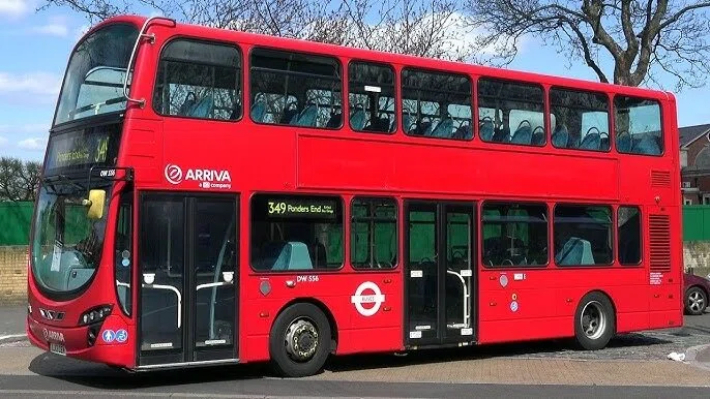
Consider Arriva London's rollout of the FlowOS Live AI platform. After piloting in 2025, Arriva cut passenger waits by 20% across 500+ buses, with full deployment by 2026. Controllers praised its ability to manage disruptions like roadworks autonomously.
Another example: Optibus AI in U.S. cities optimized routes for 30% fuel savings. In Asia, Singapore's LTA uses comparable tech for 98% on-time performance. These cases prove AI-driven bus control software scales globally, from urban grids to intercity networks.
Lessons for Metroline:
1. Integrate with passenger apps for ETAs accurate to 1-2 minutes.
2. Train staff on AI insights via interactive simulations.
3. Monitor ROI through KPIs like dwell time reduction and passenger satisfaction scores.
4. Partner with telematics providers for seamless data flow.
In China, operators like those using Bonluck buses have piloted similar systems, achieving 22% delay reductions in megacities like Shanghai. These successes highlight universal applicability, even for diverse fleet compositions.
Industry experts emphasize AI service control for public transport enhances safety and sustainability. Dr. Elena Vasquez, a transport AI specialist, notes: "AI doesn't replace drivers; it empowers them with predictive tools, reducing fatigue-related incidents by 30%."
Core advantages:
- Predictive maintenance: Flags issues pre-breakdown, extending vehicle life by 15-20%.
- Demand forecasting: Scales service for events or weather spikes with 90% accuracy.
- Carbon reduction: Optimized routes lower emissions by 10-15%.
- Cost efficiencies: Lowers overtime by automating shift planning.
For fleet managers, this means lower TCO—total cost of ownership—amid rising fuel prices. Experts predict AI will integrate with autonomous vehicles by 2030, paving the way for driverless operations in controlled environments.
Operators worldwide seek actionable guidance. Here's a step-by-step adoption roadmap for AI-driven software for bus fleets:
1. Assess Needs: Audit current telematics and pain points (e.g., delay logs, fuel usage).
2. Select Vendor: Prioritize GPS integration and scalability; pilot for 3 months on 10% of fleet.
3. Integrate Data: Link with ETMS (Electronic Ticket Machines), CCTV, and AVL systems.
4. Train Teams: Use vendor-led workshops; aim for 90% proficiency within weeks.
5. Monitor & Scale: Track metrics weekly via dashboards; expand post-ROI proof.
6. Upgrade Hardware: Ensure 5G/GPS compatibility; budget for retrofits on older buses.
7. Evaluate Compliance: Align with local regs like GDPR or TfL standards.
Implementation timeline:
| Phase | Duration | Key Milestone |
|---|---|---|
| Planning | 1-2 months | Vendor shortlist and budget approval |
| Pilot | 3 months | 20% efficiency gain on test routes |
| Full Rollout | 6-9 months | City-wide coverage with 95% uptime |
| Optimization | Ongoing | Annual audits and feature updates |
KeyChain, China's leading used commercial vehicle supplier, supports upgrades with high-performance second-hand buses compatible with AI systems. Visit keychainauto.com or email abbie@keychainventure.com for tailored fleets. Call +8613572980919 today.
Passengers benefit most from reliable service. AI bus control systems enable app-based ETAs accurate to 2 minutes, reducing frustration. Metroline could extend this with chatbots for disruptions and personalized route suggestions.
UX improvements:
- Fewer "bunching" incidents by maintaining even spacing.
- Eco-routing for greener commutes, appealing to environmentally conscious riders.
- Personalized alerts via SMS or apps for delays.
- Accessibility boosts, like priority routing for wheelchair users.
Feedback loops from apps allow continuous refinement, fostering loyalty. In London, where 1.3M daily bus trips occur, these tweaks could elevate satisfaction scores significantly.
AI isn't flawless—data privacy, integration costs, and staff resistance pose hurdles. Solution: Comply with GDPR via anonymized processing and blockchain for data integrity. Initial CAPEX ($50K per depot) yields payback in 12-18 months via savings.
Risk mitigation strategies:
- Cybersecurity: Multi-factor authentication and regular penetration testing.
- Fallback modes: Manual override always available for edge cases.
- Equity focus: Prioritize underserved routes to avoid service biases.
- Change management: Involve drivers early through demos and incentives.
By addressing these proactively, Metroline minimizes downtime and builds trust.
TfL mandates support such tech under its 2030 net-zero plan. Future integrations include multimodal AI linking buses, tubes, and cycles for seamless journeys. Metroline's move aligns with global trends, like China's smart bus pilots achieving 99% reliability in Beijing.
Emerging tech like edge computing will enable onboard decisions, reducing latency. By 2028, 5G networks will supercharge real-time capabilities, opening doors to V2X communication with traffic signals.
Ready to future-proof your fleet? Contact KeyChain at +8613572980919 or abbie@keychainventure.com. As experts in high-performance used buses and trucks, we supply AI-ready vehicles globally from keychainauto.com. Get a free compatibility audit today!
Contact us to get more information!
AI software uses real-time data to optimize bus schedules, routes, and operations, reducing delays by simulating scenarios and automating adjustments.
It cuts excess waiting by up to 20%, ensures even intervals, and improves on-time performance amid traffic.
Yes, systems like FlowOS work with modern telematics on second-hand buses from suppliers like KeyChain, minimizing upgrade costs.
Initial setup: $100K-$500K for mid-size fleets; ROI in 1-2 years via 15-25% efficiency gains and fuel savings.
Anonymized processing and GDPR compliance ensure passenger data security, with regular audits.
1. https://bus-news.com/metroline-to-roll-out-ai-driven-service-control-software-on-london-buses/
2. https://www.sustainable-bus.com/its/arriva-london-artificial-intelligence-bus-operations/
3. https://optibus.com
4. https://www.tourmo.ai/passenger-transport-industry
5. https://www.vehiclebus.com/news/
6. https://www.buswhere.com/managing-substitute-bus-drivers-with-ai/
7. https://www.allrideapps.com/bus-scheduling-software-cost-effective-routes/
8. https://jsmiaodong.sell.everychina.com/sell-second-hand-bus.html
9. https://www.keytonauto.com/products/bus.html
10. https://www.keychainventure.com/la/top-10-bonluck-bus-suppliers-in-china.html


