
Views: 222 Author: Sara Publish Time: 2026-01-21 Origin: Site


Content Menu
● Why the Honda Accord Matters
● Generation Overview: 1976–2022 at a Glance
● First Generation (1976–1981): Compact and Efficient
● Second Generation (1981–1985): Larger and More Upscale
● Third Generation (1985–1989): Sleek Design and Higher Performance
● Fourth Generation (1989–1993): Grows into a True Midsize
● Fifth Generation (1993–1997): VTEC Technology and Optional V6
● Sixth Generation (1998–2002): Distinct Sedan and Coupe, More Features
● Seventh Generation (2003–2007): Power, Safety, and Tech Take a Step Up
● Eighth Generation (2008–2012): Bigger, Roomier, and Near Full-Size
● Ninth Generation (2013–2017): Efficiency and Advanced Safety
● Tenth Generation (2018–2022): Turbo Power and Modern Driver-Assist
● Practical Used-Car Buyer's Guide (1976–2022)
● How the Accord Compared to Rivals by Era
● Practical Maintenance Tips for Long-Term Ownership
● Choosing the Right Accord Generation for Different Use Cases
● Where to Source Reliable Used Commercial Vehicles
● FAQs About the Honda Accord (1976–2022)
>> 1. Which Honda Accord generation is the most reliable?
>> 2. Is the 2018–2022 Honda Accord a good used buy?
>> 3. What are common issues to watch for on older Accords?
>> 4. How does the Accord compare to the Toyota Camry?
>> 5. Does the Honda Accord make sense for fleet use?
The Honda Accord has evolved from a compact hatchback in 1976 into one of the world's most respected midsize sedans, known for reliability, safety, and everyday usability. This guide walks through every generation from 1976 to 2022, highlighting design changes, technology upgrades, and what used-car buyers should focus on.

The Honda Accord is one of the longest-running nameplates in the automotive industry, continuously produced since 1976. Over more than four decades, it has become a benchmark for practical, efficient, and long-lasting family cars in markets worldwide.
Key reasons the Accord is popular:
- Strong reliability and high resale value in most markets.
- Efficient engines with good fuel economy and acceptable performance.
- Comfortable cabins with space and refinement that improved with each generation.
- Safety innovations such as airbags, ABS, and later Honda Sensing driver-assist technologies.
This section quickly summarizes the Accord's major evolution before diving into each generation.
| Generation | Model Years (approx.) | Key Highlights | Size Class |
|---|---|---|---|
| 1st | 1976–1981 | Compact hatchback/sedan, CVCC engine, strong fuel economy. | Compact |
| 2nd | 1981–1985 | Larger body, more upscale interior and features. | Compact |
| 3rd | 1985–1989 | Sleeker design, pop-up headlights, more power. | Compact/midsize |
| 4th | 1989–1993 | Grows into midsize, more spacious and refined. | Midsize |
| 5th | 1993–1997 | VTEC engines, available V6, improved safety. | Midsize |
| 6th | 1998–2002 | Distinct sedan/coupe styling, more equipment. | Midsize |
| 7th | 2003–2007 | More power, better safety, modern electronics. | Midsize |
| 8th | 2008–2012 | Larger, near full-size in North America, upgraded comfort. | Full-size (US) |
| 9th | 2013–2017 | Lighter, more efficient, advanced infotainment & safety. | Midsize |
| 10th | 2018–2022 | Turbo engines, advanced driver aids, modern design. | Midsize |
The first-generation Honda Accord debuted in 1976 as a compact hatchback aimed at fuel-conscious buyers after the oil crises. Its combination of efficiency, practicality, and surprising standard equipment made it an immediate success.
Key features and improvements:
- Body styles: 3-door hatchback at launch; 4-door sedan added in 1979.
- Engines: 1.6-liter CVCC petrol engine with about 68 hp; later a 1.8-liter CVCC with around 72 hp.
- Transmissions: 5-speed manual and a 2-speed semi-automatic, later replaced by a 3-speed automatic.
- Notable equipment: AM/FM radio, cloth upholstery, tachometer, intermittent wipers, and warning lights for blown bulbs or open doors—features that were advanced for the era.
For buyers of older used Accords, this generation mainly appeals to collectors rather than daily use, due to age and limited safety by modern standards.
The second-generation Accord arrived for the 1982 model year with a restyled, slightly larger body and a more upscale feel. It continued as a hatchback and sedan, but moved upmarket in both design and features.
Key changes:
- Longer wheelbase and larger overall dimensions, improving interior room and comfort.
- Richer interiors with velour upholstery, digital clock, cassette stereo, air conditioning, power windows, and power locks on many versions.
- Mechanical updates: 1.8-liter engine with improved power, plus a 4-speed automatic introduced in 1983 for better efficiency and drivability.
This generation helped establish the Accord as a serious alternative to more expensive European and American sedans in many markets.
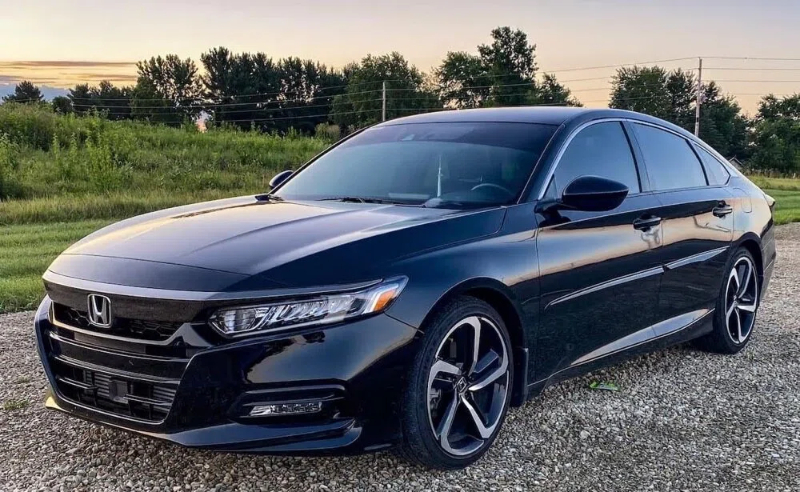
The third-generation Accord introduced a more aerodynamic, modern shape, with some models featuring pop-up headlights. Honda focused on handling, refinement, and a more driver-oriented character.
Highlights:
- Sleeker bodywork and lower stance for better aerodynamics and style.
- Improved engines with higher output and available fuel injection on some markets.
- Chassis tuning that provided sharper steering and more precise handling compared with earlier models.
For enthusiasts looking at older Accords, this generation sits at the intersection of classic looks and more modern dynamics.
By the fourth generation, the Accord had clearly moved into the midsize category, especially in North America. The 1990 Accord was larger, more comfortable, and more refined than its predecessor.
Key improvements:
- Dimensions: Length around 184.4 inches and wheelbase about 107.1 inches, creating a much more spacious cabin.
- Design: Airy roofline, low beltline, and clean surfaces, replacing earlier pop-up headlights with fixed units for a more contemporary look.
- Mechanical and safety: More powerful engines and improved structural integrity, reflecting growing consumer expectations in the early 1990s.
Shoppers who want a simple, durable sedan may still find well-kept fourth-generation models in some markets, though safety and emissions standards will lag modern cars.
The fifth-generation Accord refined the midsize formula with more advanced engines and improved safety. It also offered one of the early V6 options in the Accord lineup.
Key updates:
- Engines: 2.2-liter 4-cylinder VTEC petrol engine producing around 130–145 hp depending on tuning; a 2.7-liter V6 with about 170 hp and 165 lb-ft introduced in the mid-1990s.
- Transmissions: 4-speed automatic or 5-speed manual on most variants.
- Safety: Dual airbags, reinforced side-impact beams, and (on higher trims) ABS and 4-wheel disc brakes.
- Styling updates: A mid-cycle facelift around 1996 brought more rounded bumpers and updated front and rear lighting.
For budget-conscious buyers, fifth-generation Accords can still provide solid basic transportation if rust and maintenance are under control.
The sixth-generation Accord offered different bodies for sedan and coupe, with the coupe having unique sheet metal and sportier handling. This generation balanced comfort, performance, and style nicely for late-1990s buyers.
Notable characteristics:
- Body styles: 4-door sedan as the core family car; 2-door coupe with more aggressive lines and slightly sportier suspension tuning.
- Engines: 2.3-liter 4-cylinder VTEC engine around 135–140 hp; optional 3.0-liter V6 with about 200 hp.
- Equipment: Increasing availability of features like sunroof, alloy wheels, upgraded audio, and security systems as buyers began to expect more standard equipment.
Many used-car buyers still consider this generation a good balance of simplicity, comfort, and relatively modern safety and convenience.
The seventh-generation Accord was launched for the 2003 model year with fully redesigned bodywork and a more modern interior. It continued as a midsize sedan and coupe, with more powerful engines and improved safety.
Key improvements:
- Larger and stronger body structure designed for better crash performance.
- Interior upgrades including improved materials, more ergonomic controls, and higher-end audio and climate options.
- Powertrains: Higher output 4-cylinder and V6 engines with smoother performance and better highway refinement.
From a used-car perspective, this generation is attractive for buyers wanting modern features without the higher complexity of later turbocharged or hybrid models.
Introduced in 2008, the eighth-generation Accord grew significantly in size, especially in North America, where it effectively became a full-size sedan by EPA standards. Honda focused on space, comfort, and higher perceived quality.
Highlights:
- Size growth: About 4 inches longer and 3 inches wider than its predecessor, resulting in an exceptionally roomy cabin.
- Standard equipment: Power windows, dual-zone climate control, and an auxiliary audio input on many models.
- Higher trims: Leather upholstery, sunroof, parking sensors, rain-sensing wipers, fog lights, rear camera, and available navigation system.
Families and fleet operators often favor this generation for its generous rear-seat space and comfortable ride on longer trips.
The ninth-generation Accord shifted focus toward lightweight design and efficiency, while also bringing more sophisticated infotainment and safety technology.
Key improvements:
- Updated chassis: Changes such as switching to an all-strut front suspension and adopting electric power steering to reduce weight and improve fuel economy.
- Exterior technology: LED headlamps, daytime running lights, and LED taillamps on many trims.
- Infotainment: Standard 8-inch screen in many variants, rearview camera, and Honda's i-MID system with Bluetooth connectivity, USB input, and alloy wheels on numerous trims.
- Safety: Features like blind-spot monitoring, lane-departure warning, and available forward-collision warning on many models, anticipating today's active-safety expectations.
This generation is especially appealing on the used market for buyers who want modern connectivity and active-safety features at a comparatively accessible price.
The tenth-generation Accord, launched for the 2018 model year, brought a bold new design, downsized turbocharged engines, and a high level of standard technology. It also refined ride quality and cabin comfort for competitive midsize-segment expectations.
Powertrains and performance:
- Standard engine: Turbocharged 1.5-liter 4-cylinder VTEC with about 192 hp, paired with a 6-speed manual or CVT in many markets.
- Optional engine: Turbocharged 2.0-liter 4-cylinder VTEC delivering around 252 hp, mated to either a 6-speed manual or a 10-speed automatic, depending on trim.
Technology and comfort features:
- Available head-up display (HUD), front and rear parking sensors, adaptive dampers, and multi-way power seats with advanced lumbar support.
- Acoustic laminated glass and improved sound insulation for a quieter cabin.
- In 2021, a mild facelift brought a revised grille, new wheel designs, brighter LED headlights, and standard Android Auto and Apple CarPlay on many trims.
For many buyers, 2018–2022 Accords strike an excellent balance between efficiency, performance, and cutting-edge driver-assist systems.
For global buyers comparing different Accord years, focusing on reliability, safety, and running costs is more important than minor styling details.
Recommended generations for daily use:
- Best value (budget-minded): 6th, 7th, and 8th generations (late 1990s to early 2010s) for those wanting basic modern safety and comfort without higher electronics complexity.
- Modern tech sweet spot: 9th and 10th generations (2013–2022) for strong safety suites, connectivity, and fuel economy.
Key inspection points when buying used:
1. Service history: Look for regular oil changes, timely timing-belt or chain service, and documented transmission maintenance.
2. Transmission condition: Test for smooth shifting, especially on older automatics and CVTs.
3. Suspension and steering: Listen for knocking or clunking noises over bumps, and check for wandering or vibration at highway speeds.
4. Safety features: Confirm that important systems such as ABS, airbags, and advanced driver-assist functions (where equipped) work properly.
5. Rust and structural issues: Particularly critical on older generations where corrosion protection may be weaker than modern standards.
To understand the Accord's evolution, it helps to see how it stacked up against competitors in each decade.
Late 1970s–1980s:
- The Accord offered more refinement and standard equipment than many compact rivals from the US and Europe.
- Honda's CVCC technology provided excellent fuel economy without sacrificing drivability as much as some early economy cars.
1990s:
- As a midsize, the Accord competed heavily with models like the Toyota Camry.
- Honda emphasized driver engagement (steering and handling), while maintaining strong reliability and conservative styling.
2000s–2010s:
- The Accord kept pace with rivals by adding V6 options, advanced audio/navigation, and improved crash safety.
- In many markets, consumer surveys continued to rate the Accord as one of the most dependable choices in the midsize segment.
2018–2022:
- By the tenth generation, the Accord positioned itself as a tech-forward midsize sedan with turbo engines, sophisticated driver aids, and a refined interior.
- Compared with rivals, it offered a strong mix of efficiency, cabin space, and engaging driving dynamics.
Good maintenance is essential to maximizing the lifespan of any used Honda Accord.
Core maintenance practices:
- Follow manufacturer intervals: Respect recommended service intervals for engine oil, coolant, transmission fluid, and brake fluid to prevent premature wear.
- Timing components: On certain generations, replacing timing belts and water pumps proactively can prevent catastrophic engine damage.
- Brake and tire care: Inspect pads, rotors, and tire condition regularly to maintain safety and handling performance.
- Electronics and sensors: On newer Accords, keep software updated where applicable and address warning lights promptly to avoid damaging related systems.
Benefits of proper maintenance:
- Extends vehicle life, keeps fuel consumption optimal, and protects resale value.
- Reduces the risk of sudden breakdowns, making the car more suitable for fleet or commercial use where uptime is critical.
Different generations of Accord suit different types of buyers and business needs.
For private owners:
- City commuting: Later generations (9th and 10th) with smaller turbo engines or efficient 4-cylinders provide good fuel economy and easy urban driving.
- Family use: 8th–10th generations offer the best combination of rear-seat space, safety, and comfort for daily family duties.
For fleet operators or commercial users:
- Durability and simplicity: 6th–8th generations are attractive where ease of service and parts availability matter more than the latest technology.
- Corporate duty fleets: 9th–10th generations deliver a more premium image with modern safety that may be required by corporate policies.
While the Honda Accord is primarily a passenger vehicle, many businesses run mixed fleets that include passenger cars, buses, and heavy-duty trucks. For commercial operations looking beyond sedans to high-performance buses and heavy trucks, partnering with a specialized supplier can simplify procurement and after-sales support.
Key points when choosing a commercial vehicle supplier:
- Ability to provide one-stop solutions, from sourcing to inspection, customization, logistics, and export documentation.
- Expertise with global shipping and export compliance, including pre-shipment inspection where required.
- Capability to match vehicle configurations (engine power, seating layout, body type) to your local regulations and road conditions.
KeyChain is a China-based supplier focusing on used commercial vehicles, especially buses and heavy trucks, for global customers. Businesses that run both passenger cars like the Accord and commercial fleets can benefit from consolidating procurement through experienced export partners.
If your business needs reliable used commercial vehicles—from robust buses for public transport to heavy-duty trucks for logistics and construction—partner with KeyChain for streamlined sourcing, inspection, and global shipping. Contact us today: Website: keychainauto.com; Phone/WhatsApp: +86 13572980919; Email: abbie@keychainventure.com. Share your target market, vehicle types, and budget for tailored inventory and logistics solutions.
Contact us to get more information!
A: Many owners and reviewers consider the 6th, 7th, and 8th generations highly reliable when properly maintained, thanks to proven naturally aspirated engines and relatively simple electronics.
A: Yes, the 10th-generation Accord offers modern turbo engines, advanced safety features, and strong fuel economy, making it an excellent option if you want contemporary technology and comfort.
A: On aging models, buyers should pay attention to automatic transmission behavior, suspension wear, rust in certain climates, and overdue timing-belt service on belt-driven engines.
A: Historically, the Accord is often praised for more engaging handling, while the Camry is known for a softer ride; both rank highly in reliability and resale value in many markets.
A: Yes, many fleets choose the Accord for its balance of reliability, fuel efficiency, and comfort, especially in the 8th–10th generations where cabin space and safety features are strong.
1. https://blog.beforward.jp/car-review/honda-accord-1976-2022-model-year-differences-and-improvements.html
2. https://www.keychainauto.com
3. https://www.brickellhonda.com/a-comparison-of-the-honda-accord-through-the-years-a-look-at-the-evolution-of-the-iconic-car
4. https://www.cars.com/research/honda-accord/
5. https://en.wikipedia.org/wiki/Honda_Accord


