
Views: 233 Author: Keychain Venture Publish Time: 2026-08-29 Origin: Site


Content Menu
● Leasing vs. Buying Commercial Vehicles: The Core Difference
● Why Electric Commercial Vehicles Require a Different Decision Model
>> Understanding Total Cost of Ownership
● When Leasing Electric Buses and Heavy Trucks Makes Sense
>> Lower Upfront Capital Requirements
>> Predictable Monthly Fleet Costs
>> Easier Fleet Technology Renewal
>> Reduced Residual-Value Exposure
>> Leasing Risks to Review Carefully
● When Buying Commercial Vehicles Is the Better Choice
>> Full Control Over Fleet Assets
>> Better Alignment With Charging Investment
● How to Compare Leasing and Buying for an Electric Fleet
>> Step 1: Define the Real Duty Cycle
>> Step 2: Build a Charging and Energy Plan
>> Step 3: Compare Three Financial Scenarios
>> Step 4: Assess Vehicle Supplier Readiness
● Leasing vs. Buying by Fleet Situation
● Practical Guidance for New Energy Vehicle Buyers
● Summary
>> Is leasing or buying better for an electric bus fleet?
>> Are electric heavy trucks cheaper to operate than diesel trucks?
>> What should be included in a commercial vehicle total cost of ownership calculation?
>> Can a leased electric bus or truck be customized?
>> What should importers check before purchasing electric buses or trucks from China?
Choosing whether to lease or buy commercial vehicles is not simply a question of monthly payments. For fleet operators, it is a long-term business decision that affects capital allocation, operating costs, maintenance responsibility, vehicle uptime, charging infrastructure, and asset value.
For companies investing in electric buses, heavy-duty trucks, and other new energy vehicles, the right choice depends on more than the initial vehicle price. Route conditions, annual mileage, energy costs, expected service life, financing terms, technical support, and local infrastructure all play a role.
KeyChain supports domestic and international buyers sourcing high-quality electric buses, heavy trucks, and new energy vehicles from China. This guide explains how fleet managers, logistics companies, municipal operators, contractors, and transportation investors can make a more informed leasing-versus-buying decision.
> Key takeaway: Leasing can reduce initial capital pressure and make fleet costs more predictable. Buying can provide stronger long-term control, greater customization flexibility, and the opportunity to retain residual value. The best decision begins with a detailed total cost of ownership analysis.
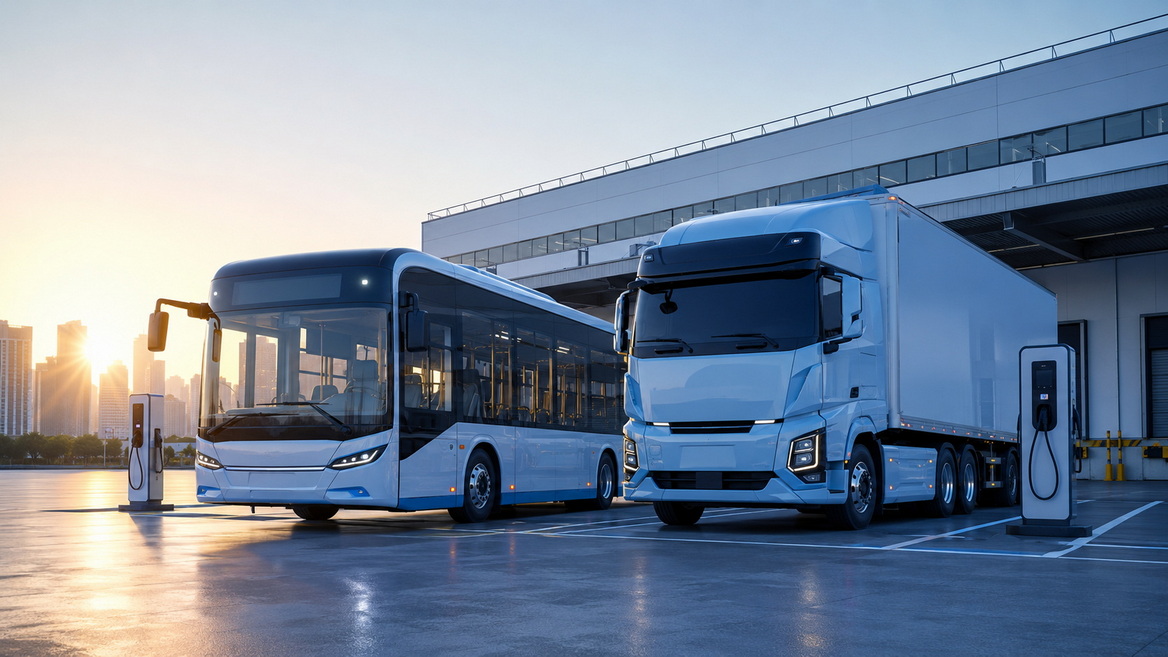
Buying a commercial vehicle means your business owns the bus, truck, coach, or specialized vehicle after completing the purchase. The purchase may be made with cash, bank financing, hire purchase, or another asset-financing method.
When you own the vehicle, you control how long it remains in service, where it is maintained, when it is refurbished, and when it is sold. You also retain the possible resale value at the end of its operating life.
Leasing means your company pays to use the vehicle for an agreed period. The leasing company or financial institution normally retains ownership of the asset. At the end of the contract, the vehicle may be returned, replaced, renewed, or purchased under agreed conditions.
For commercial fleets, this choice has wider implications than it does for private car buyers. A bus or heavy truck is a productive business asset. If it does not meet route requirements, suffers frequent downtime, or becomes expensive to operate, the impact can affect service quality, freight delivery performance, passenger satisfaction, and profitability.
| Decision Factor | Buying a Commercial Vehicle | Leasing a Commercial Vehicle |
|---|---|---|
| Vehicle ownership | Your company owns the asset | The lessor usually owns the asset |
| Upfront investment | Higher unless financed | Often lower at the beginning |
| Monthly cash requirement | Loan payments may apply | Fixed lease payments apply |
| Depreciation risk | Usually carried by the buyer | May be partly transferred to the lessor |
| Residual value | Retained by the owner | Normally retained by the lessor |
| Vehicle modifications | Greater freedom | Often restricted by contract terms |
| Mileage limits | No contractual limit | May have annual mileage restrictions |
| Maintenance responsibility | Managed by the owner unless outsourced | May be included, partly included, or excluded |
| Technology replacement | Based on your own replacement plan | Can be easier at the end of each lease cycle |
| Best fit | Stable, long-term and customized operations | Growth-stage fleets, pilot projects, or shorter planning cycles |
Electric buses and electric heavy trucks often require a more detailed financial and operational review than conventional diesel vehicles. Although an electric vehicle may have a higher purchase price, its operating cost profile can be very different over time.
Energy costs may be lower in some operating environments. Maintenance requirements may also change because electric drivetrains have fewer moving parts than traditional internal combustion engines. However, electric fleets also require attention to battery capacity, charging schedules, grid capacity, charging hardware, electricity tariffs, battery warranty coverage, and technician training.
For this reason, a fleet should never compare vehicles only by purchase price or monthly payment.
The more useful question is:
> "Which ownership model will deliver the lowest long-term operating cost while keeping the fleet reliable, available, and suitable for its actual routes?"
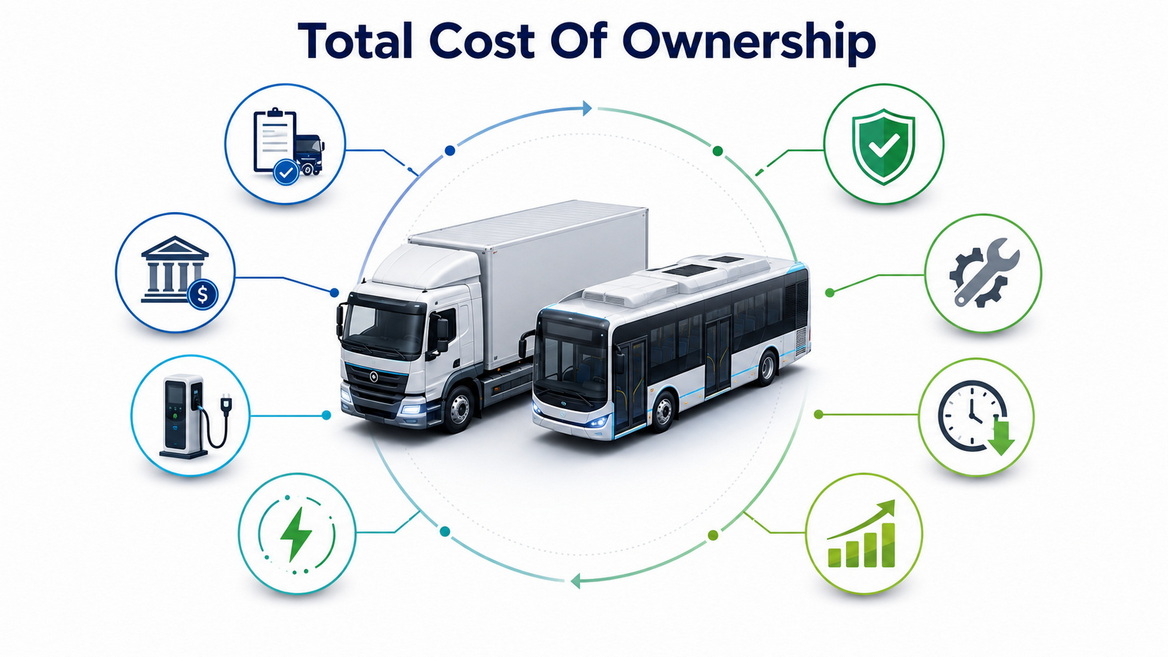
Total cost of ownership, often called TCO, includes the full cost of acquiring, operating, maintaining, and eventually replacing or disposing of a vehicle.
A practical commercial vehicle TCO model includes:
TCO=Acquisition Cost+Financing Cost+Energy Cost+Maintenance Cost+Infrastructure Cost+Downtime Cost−Residual Value
For electric buses, heavy trucks, and new energy vehicles, operators should also include:
- Vehicle purchase price or lease payments
- Down payment and financing interest
- Battery capacity and battery warranty terms
- Electricity consumption by route and season
- Charging equipment and installation cost
- Depot electrical upgrades and grid connection costs
- Electricity demand charges and time-of-use tariffs
- Preventive maintenance and unscheduled repairs
- Tyres, insurance, registration, and taxes
- Driver training and technician training
- Spare-parts inventory and local service availability
- Vehicle downtime and replacement-vehicle cost
- Import duty, customs procedures, and compliance costs
- Expected resale value at the end of the operating period
- Local incentives, tax reductions, grants, or operational benefits where available
A commercial EV project can look attractive on paper but become less competitive if charging infrastructure is delayed, electricity pricing is unfavorable, or vehicle utilization is lower than expected. On the other hand, a well-matched electric vehicle on a predictable, high-utilization route can provide compelling long-term economics.
Leasing can be a practical choice for organizations that want to expand their fleet without committing large amounts of capital at the beginning. It may also suit companies that want more predictable monthly costs or need flexibility while electric vehicle technology continues to develop.
A lease can help a business preserve working capital for other necessary investments, including charging infrastructure, warehouse operations, route expansion, staffing, digital fleet management systems, and spare-parts inventory.
One of the clearest advantages of leasing is reduced initial financial pressure. Instead of paying the full purchase price of an electric bus or heavy-duty truck, the fleet makes scheduled payments over the agreed contract period.
This can be especially useful for:
- Start-up logistics companies
- Shuttle operators launching new routes
- Businesses replacing an aging fleet
- Municipal fleets with limited capital budgets
- Operators testing electric vehicles for the first time
- Companies investing in charging infrastructure at the same time
Electric fleets often require more than vehicle investment. Depot chargers, high-voltage connections, electrical engineering work, software systems, and staff training can create substantial early-stage costs. Leasing may allow the organization to allocate funds across the entire project rather than concentrating capital only on vehicle acquisition.
A well-structured lease can provide more predictable financial planning. Payments are generally fixed for the length of the agreement, helping finance teams forecast costs and manage cash flow.
Some contracts may include services such as:
- Scheduled maintenance
- Roadside support
- Vehicle replacement arrangements
- Telematics systems
- Tyre management
- Insurance support
- Registration administration
However, fleet buyers should carefully review the agreement because not all services are automatically included. The lowest monthly payment does not always represent the lowest total operating cost.
Electric vehicle technology is developing quickly. Battery energy density, thermal management, vehicle software, charging solutions, and fleet-monitoring systems are improving over time.
A lease can help operators refresh their fleet at the end of a contract without managing the resale process themselves. This can be useful for a business that expects to upgrade vehicles every three to five years.
For example, a last-mile delivery company might lease a group of electric distribution trucks while it evaluates real-world energy consumption, charging reliability, driver feedback, and maintenance requirements. At the end of the lease, the company can decide whether to renew, expand, change the specification, or move toward ownership.
The future used-market value of electric commercial vehicles can be difficult to predict, particularly in markets where electric truck and bus adoption is still growing.
When leasing, some of the residual-value risk may be transferred to the leasing company. However, this depends on the contract structure. Buyers should confirm who carries the risk if the vehicle's market value is lower than expected at the end of the agreement.
Leasing can create operational restrictions that do not suit every fleet. Before signing, review the contract for:
- Annual mileage limits
- Charges for exceeding mileage limits
- Restrictions on vehicle modifications
- Early termination penalties
- Return-condition standards
- Charges for damage or excessive wear
- Battery performance and degradation conditions
- Maintenance exclusions
- Charging equipment responsibilities
- Insurance requirements
- Cross-border operation restrictions
- Restrictions on vehicle branding, bodywork, or specialist equipment
For buses, details such as passenger capacity, door layout, wheelchair-accessibility features, air-conditioning performance, luggage space, interior materials, and charging compatibility should be confirmed before the contract begins.
For trucks, operators should define payload requirements, axle configuration, body type, cargo equipment, battery capacity, charging standard, power take-off requirements, and route conditions before committing to a lease.
Buying may be the stronger strategy for organizations with stable, long-term operations and confidence in their vehicle utilization. Ownership gives the fleet more control over the vehicle's specifications, maintenance, operating life, customization, and resale timing.
It can be especially suitable for city bus operators, industrial transport fleets, long-term logistics contractors, mining operations, ports, airports, and companies using specialized heavy-duty vehicles.
When a company owns its buses or trucks, it can decide how the assets are operated and maintained. This is valuable for fleets with unique operational needs.
Ownership can support:
- Custom bus seating layouts
- Airport or hotel shuttle configurations
- Wheelchair-accessible passenger vehicles
- Refrigerated truck bodies
- Tipper bodies and dump trucks
- Tanker and specialized industrial applications
- Port and terminal tractors
- Mining and construction transport equipment
- Branded vehicle exteriors and interior finishes
- Fleet telematics and monitoring integrations
A leasing company may restrict modifications because they can affect the vehicle's residual value. Ownership removes many of these limitations.
High-utilization fleets may benefit from buying because there are no contract-based mileage limits. For operators running continuous city routes, intercity buses, shuttle services, regional delivery operations, or port logistics, annual mileage can be substantial.
A leased vehicle may become more expensive if the actual operating distance significantly exceeds the original contract assumptions. Buying gives the fleet more flexibility to increase utilization when market demand grows.
A purchased vehicle may continue generating value after financing payments end. If the vehicle remains reliable and suitable for operations, the fleet can operate it for additional years without a lease payment.
The company may also sell, trade, export, rebuild, or redeploy the asset when operational needs change. This residual value can improve the long-term financial case, although it should be estimated conservatively.
Electric commercial vehicle fleets often require dedicated charging infrastructure. A fleet that owns both its vehicles and charging system can plan long-term depot operations more effectively.
The company can design charging schedules around:
- Vehicle departure times
- Driver shifts
- Electricity tariff periods
- Depot parking layout
- Battery state of charge
- High-demand route periods
- Charger maintenance windows
- Future fleet expansion
This approach can be particularly effective for city buses, airport shuttles, regional delivery fleets, and industrial vehicles returning to the same depot every day.
Ownership also comes with financial and operational responsibility. Buyers should account for:
- Higher upfront capital requirements
- Financing interest and debt exposure
- Depreciation risk
- Maintenance planning and staffing
- Spare-parts management
- Battery warranty administration
- Repair costs outside warranty
- Vehicle resale and disposal management
- Potential changes in technology or market value
- Underutilization risk if routes are reduced
Buying is most successful when it is supported by accurate fleet planning, reliable service arrangements, route analysis, charging design, and realistic lifecycle-cost assumptions.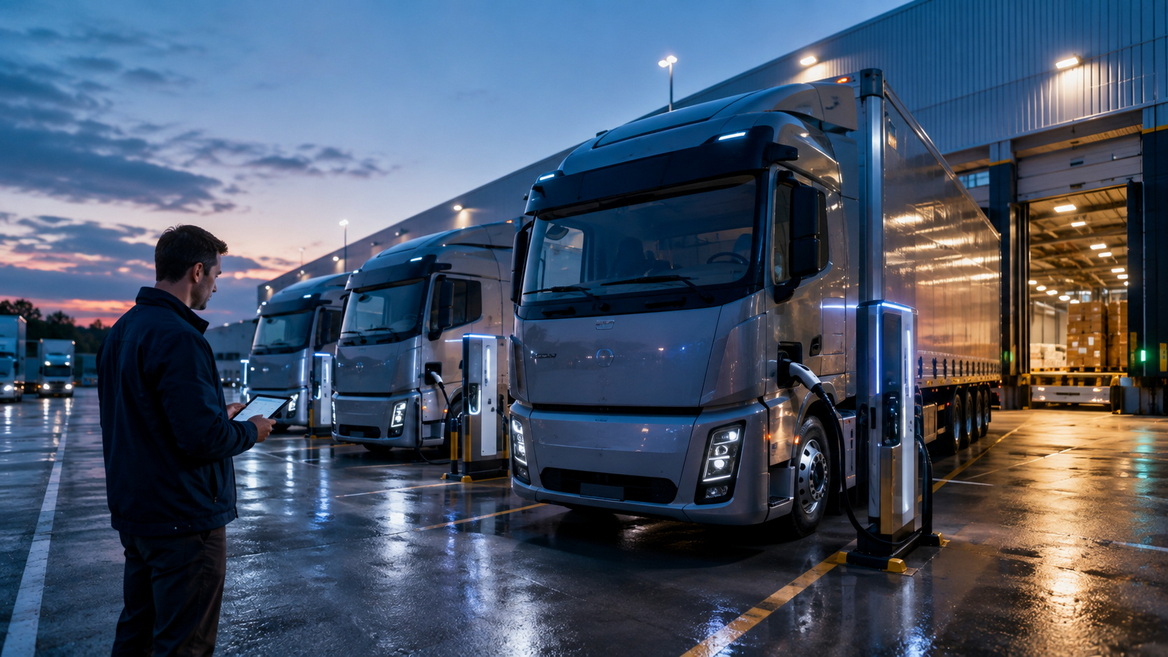
The strongest commercial vehicle decision is based on real operational data. Avoid using only manufacturer range figures, standard finance illustrations, or optimistic energy-cost assumptions.
A good comparison should be conducted by vehicle type, route, duty cycle, and operating location.
The duty cycle describes how a vehicle actually operates. It should include route distance, traffic conditions, loading, terrain, climate, charging availability, and operating hours.
Collect the following information:
- Daily kilometres per vehicle
- Annual mileage
- Average vehicle speed
- Number of stops per route
- Passenger volume or freight payload
- Road gradients and terrain
- Local weather conditions
- Heating and air-conditioning demand
- Depot dwell time
- Charging opportunity during the day
- Required range reserve
- Driver shift length
- Vehicle replacement requirements
Electric city buses can be highly suitable for predictable urban routes because they often return to a depot, operate within a defined service area, and have known daily distance requirements.
Heavy-duty electric trucks may be particularly effective in port transport, regional distribution, industrial transfer, urban delivery, construction-material hauling, and fixed-route logistics. The suitability of each application should be validated using actual route data.
Charging strategy is as important as vehicle selection. A vehicle with sufficient battery capacity may still create operational problems if the fleet cannot charge reliably during required time windows.
Fleet planners should answer these questions:
1. Is overnight charging sufficient for all vehicles?
2. Will daytime charging be required?
3. Does the depot have enough electrical capacity?
4. Are grid upgrades necessary before deployment?
5. Will peak-demand charges affect electricity costs?
6. Which charging connector and communication standard is required?
7. What backup plan exists if a charger is unavailable?
8. Can charging be scheduled during lower-cost electricity periods?
9. Is battery swapping suitable for the application?
10. How will charging capacity expand as the fleet grows?
A robust energy plan includes contingency capacity. Do not design a fleet around perfect charger availability or maximum theoretical vehicle range.
A single forecast is not enough. Create three scenarios to understand how sensitive the investment is to changing conditions.
| Scenario | Assumptions | Why It Matters |
|---|---|---|
| Best-case | High utilization, low energy cost, strong resale value, stable charging access | Shows maximum possible savings |
| Base-case | Expected mileage, normal maintenance, realistic energy use, moderate residual value | Supports standard approval decisions |
| Stress-case | Higher electricity cost, delayed chargers, lower utilization, weaker resale value | Tests whether the project remains financially viable |
This approach helps management identify whether a project is genuinely resilient or only attractive under ideal conditions.
Vehicle cost is only one part of fleet success. International buyers should also evaluate the supplier's ability to support the vehicle after delivery.
Before purchasing or leasing an imported electric bus or heavy truck, confirm:
- Destination-market certification requirements
- Vehicle dimensions and weight compliance
- Battery type, capacity, cooling system, and warranty
- Charging interface and local charging compatibility
- Spare-parts package and recommended stock quantity
- Remote diagnostics capability
- Availability of software updates
- Driver and technician training support
- Service documentation in English
- Lead time for critical components
- Local service partners, if available
- Shipping terms and delivery responsibilities
- Customs documentation and import requirements
- Warranty claim process and response time
A lower purchase price can lose its advantage if the operator experiences extended downtime because replacement components, technical support, or diagnostic access are not available.
| Fleet Situation | Usually the Better Starting Point | Reason |
|---|---|---|
| New logistics company with limited working capital | Leasing or financed purchase | Protects cash flow while the business grows |
| Municipal city bus fleet with long-term fixed routes | Buying or long-term financing | Supports depot charging investment and a longer service life |
| Company testing electric delivery trucks | Short-term leasing or a controlled pilot purchase | Reduces risk while real operating data is collected |
| Port, mining, or industrial shuttle operation | Buying or tailored asset finance | Predictable routes can support high utilization and stronger lifecycle economics |
| Fast-growing shuttle or rental business | Leasing | Helps scale vehicle numbers and refresh assets more easily |
| Fleet requiring customized buses or specialized truck bodies | Buying | Provides greater freedom for vehicle specification and modification |
| International buyer importing electric vehicles from China | Buying, export finance, or customized leasing | Standard local lease products may not suit imported vehicle specifications |
The most common mistake in commercial vehicle procurement is treating leasing versus buying as a finance-only question. In reality, the decision should involve operations, procurement, fleet maintenance, energy management, accounting, and vehicle suppliers.
A company may find that the best approach is not to lease every vehicle or buy every vehicle. A mixed fleet strategy may be more practical.
For example:
- Lease new electric delivery trucks while testing routes and charging performance.
- Purchase long-life electric buses operating on stable city routes.
- Finance specialized heavy-duty trucks that need customized bodies or equipment.
- Use shorter-term contracts for temporary projects, seasonal demand, or uncertain service volumes.
- Own charging infrastructure where long-term depot operations justify the investment.
China has become a major manufacturing base for electric buses, electric trucks, batteries, and new energy commercial vehicles. This provides international buyers with access to a broad range of vehicle classes, including city buses, coaches, light-duty delivery vehicles, tractor trucks, dump trucks, terminal tractors, shuttle buses, and specialized vocational vehicles.
However, buyers should select vehicles based on local operating conditions rather than production scale alone. A successful vehicle program requires the right specification, energy strategy, compliance documentation, spare-parts support, and service plan for the destination market.
Leasing and buying both have legitimate roles in commercial vehicle fleet management.
Leasing is often suitable for companies that want to preserve capital, improve monthly cost predictability, reduce exposure to fast-changing technology, or test electric vehicle performance before full deployment.
Buying is often better for operators that need long-term control, high annual utilization, customized specifications, stable routes, and the ability to retain residual value.
For electric buses, heavy-duty trucks, and other new energy vehicles, the most reliable decision is based on route-specific total cost of ownership. Consider vehicle acquisition, financing, energy use, charging infrastructure, maintenance, downtime, warranty support, compliance requirements, and end-of-life asset value together.
KeyChain works with buyers seeking high-performance buses, heavy trucks, and new energy vehicle solutions from China. A clear understanding of fleet requirements, technical specifications, and operating conditions is the foundation for selecting the right vehicle and ownership model.
Buying is often suitable for a long-term electric bus fleet with fixed routes, stable depot charging, and a planned operating life of many years. Leasing may be more appropriate for pilot projects, newly established operators, or fleets that want to limit initial capital expenditure.
They can be, but the result depends on annual mileage, electricity pricing, diesel pricing, charging efficiency, payload, maintenance costs, financing terms, and vehicle utilization. Electric heavy trucks are generally more attractive on predictable, high-utilization routes with reliable charging access.
A complete calculation should include purchase price or lease payments, financing costs, fuel or electricity, charging infrastructure, maintenance, insurance, tyres, taxes, registration, downtime, driver and technician training, spare parts, residual value, and available incentives.
It depends on the lease agreement. Some leases allow limited branding or approved accessories, while others restrict modifications that could affect vehicle condition or resale value. Custom seating, specialized bodies, refrigeration systems, accessibility equipment, and telematics integrations should be agreed in writing before the contract begins.
Importers should verify certification requirements, vehicle weight and dimension compliance, battery warranty, charging standards, spare-parts availability, service support, technical documentation, shipping terms, customs documentation, and after-sales responsibilities.
1. Evans Halshaw. "[Leasing vs Buying a Car: Which Is Better for You?]." Accessed August 2026.
2. International Energy Agency. "[Global EV Outlook 2026: Trends in Other EV Modes]." 2026.
3. Argonne National Laboratory. "[Economic Analysis of Vehicle Technologies]." Accessed August 2026.
4. Element Fleet Management. "[Fleet Leasing vs. Owning: Find the Best Fit for Your Business]." 2025.
5. International Energy Agency. "[Global EV Outlook 2026]." 2026.


